


1. The Minimalist Archway
The arch is a classic architectural motif that brings a sense of calm and structure to a room. For this piece, you will use a wide notched trowel or a stiff plastic scraper to carve clean, sweeping arches into a smooth layer of plaster. By keeping the color palette monochromatic—such as a warm beige, soft cream, or chalky white—the focus remains entirely on how the light plays against the curved ridges throughout the day.
2. Ocean Swells and Crashing Waves
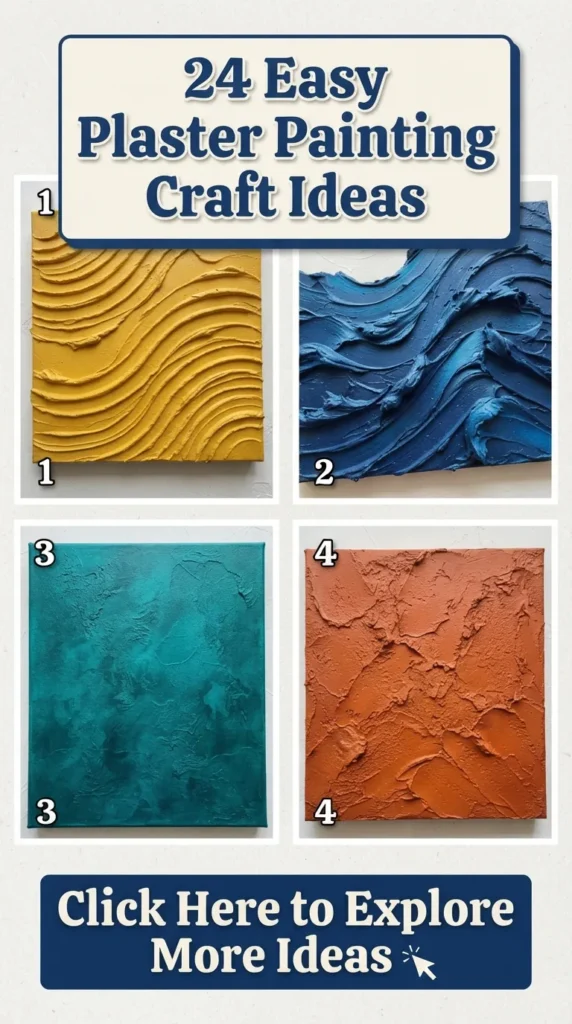
Capture the kinetic energy of the sea by layering thick plaster in overlapping, organic sweeps. Use a flexible palette knife to scoop up generous amounts of plaster and deposit them in crests and troughs across the canvas. Once dry, use a dry-brushing technique with shades of deep navy, seafoam green, and soft sandy tones, leaving the tips of the “waves” a brilliant, unpainted plaster white to mimic seafoam.
3. Tuscan Sun Clay Tones
Infuse your home with the rustic warmth of the Italian countryside. Apply a highly textured, uneven base layer of plaster across your canvas using a sponge or crumpled parchment paper to create a stucco-like finish. Paint the dry piece in rich, earthy terracotta, burnt orange, and soft ochre. This style looks incredibly elegant when styled on a wooden sideboard or paired with dried botanical arrangements.
4. Whispering Botanical Imprints
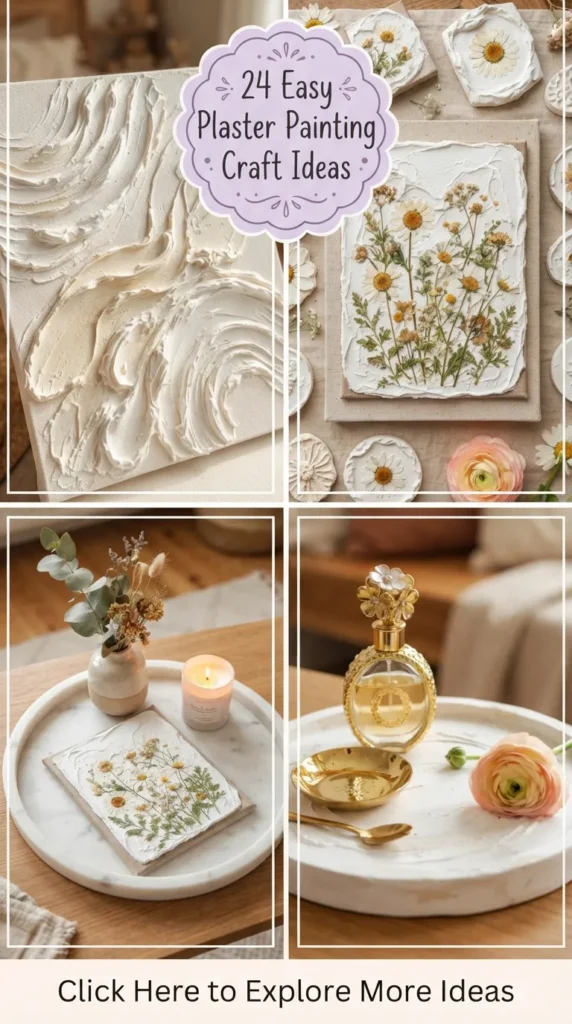
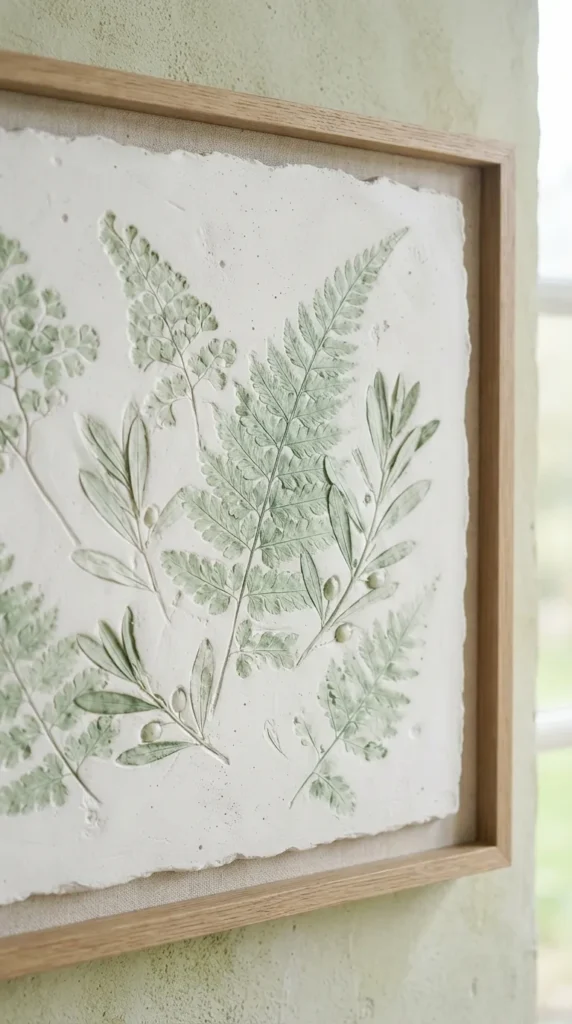
Bring nature indoors by physically pressing real botanicals into wet plaster. Collect sturdy leaves, ferns, or dried wildflowers with prominent vein structures. Lay a smooth, quarter-inch bed of plaster on your canvas, gently press the flora into the surface with a rolling pin, and carefully peel them away to reveal delicate, fossil-like impressions. Finish with a wash of sage green or soft linen paint to highlight the intricate details.
5. Ribbed Retro Stripes
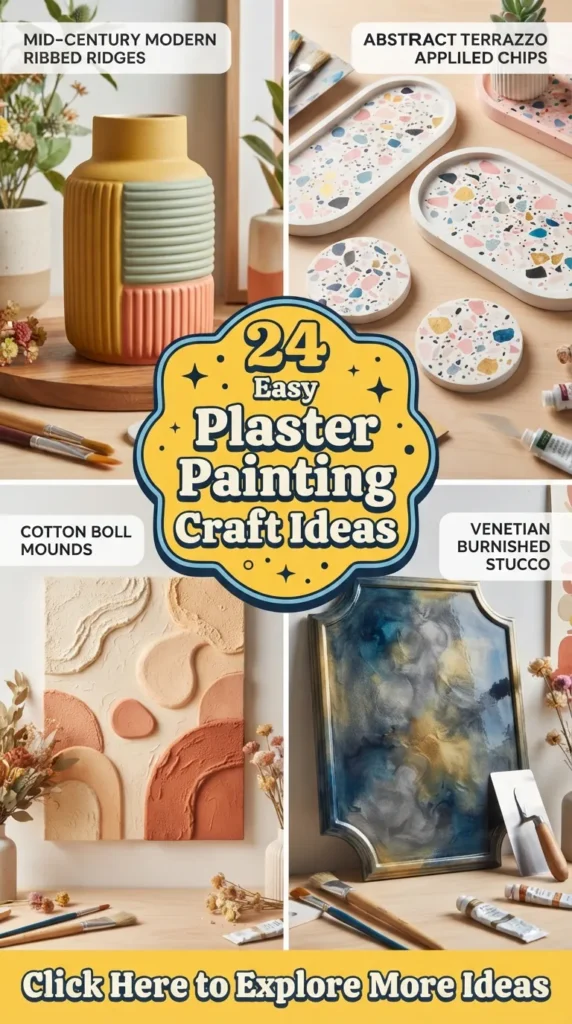
Perfect for mid-century modern and contemporary spaces, this idea utilizes a notched adhesive spreader or a simple hair comb. Apply a uniform layer of plaster to your canvas, then drag your notched tool in straight, confident vertical lines. You can keep the lines strictly parallel or introduce gentle, undulating waves. Paint the finished design in trendy retro hues like mustard yellow, olive green, or dusty rust.


6. The Abstract Terrazzo
Get the high-end look of Italian terrazzo without the weight or cost of polished stone. Mix small batches of plaster with different acrylic paint colors—think charcoal, blush, sage, and mustard. Drop small, irregular dollops of these colored plasters onto a white, semi-wet plaster background. Use a wide spatula to gently smooth and flatten the surface, blending the edges slightly to create a seamless, multi-colored stone effect.
7. Sunburst Ray Radiance
Create an eye-catching focal point by building a radial design. Mark a central point on your canvas (it can be dead center or offset for a modern look) and use a pointed palette knife to drag plaster outward in tapered rays. Vary the thickness and length of the lines to give the sunburst movement. A coat of metallic gold, bronze, or champagne paint over the rays will catch and bounce light beautifully.
8. Mountain Ridge Serenade
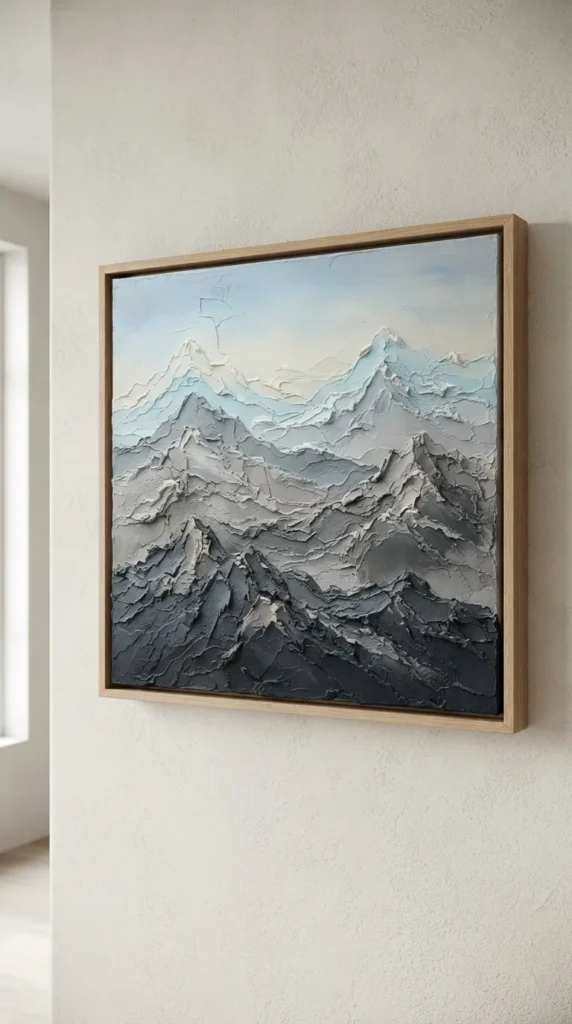
A perfect project for landscape lovers who want to keep things abstract. Build up horizontal, jagged ridges across your canvas to represent a mountain range, making the foreground ridges thicker and more defined than those in the background. Once dry, paint each “mountain” layer in a different graduating tone, creating a gorgeous ombre effect from dark charcoal at the bottom to misty grey at the top.
9. Delicate Cotton Fields
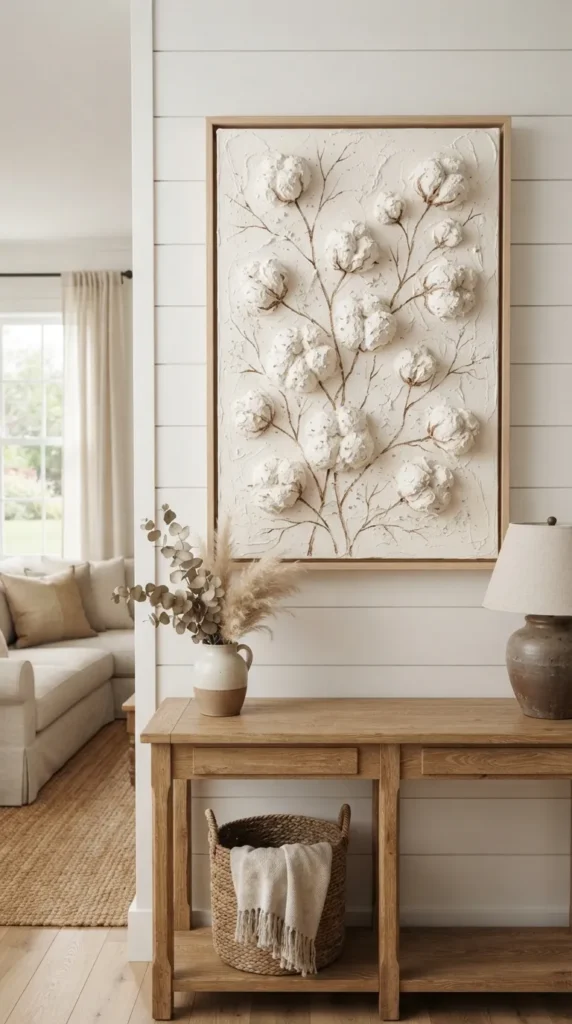
For a cozy, farmhouse-chic vibe, use a round stencil brush or your fingertips to create soft, puffy mounds of plaster that look like cotton bolls or clouds. Connect them with thin, hand-painted brown branches using a fine-liner brush. The contrast between the raised, puffy plaster “cotton” and the flat, painted stems creates a beautiful sense of dimension.
10. Venetian Plaster Stucco
Recreate the luxurious, polished look of historical Italian villas. This technique relies on applying very thin, overlapping coats of colored plaster using a flexible steel trowel. Keep your strokes short, curved, and varied. As the plaster semi-dries, run the clean metal trowel flat over the surface to burnish it, creating a natural, marble-like sheen with exquisite depth.



11. Abstract Geometric Colorblock
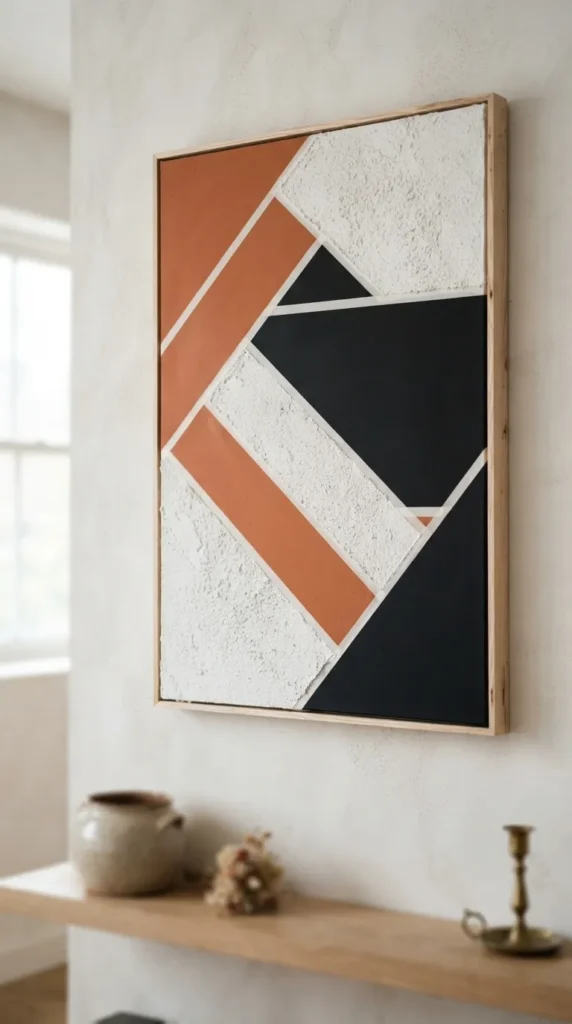
Combine structured geometric shapes with raw texture. Mask off sharp, clean triangles, rectangles, or circles using high-quality painter’s tape. Fill some sections with thick, heavily textured plaster, leave other sections completely smooth, and paint some areas in flat, bold colors. This dramatic play between raw texture, smooth canvas, and vibrant color blocking is a staple of modern Scandinavian design.
12. Celestial Moon Crater Art
Capture the mesmerizing, tactile surface of the moon on a circular canvas. Mix your plaster with a small amount of fine sand to create a gritty texture, then apply it in uneven mounds. Use the bottom of a glass, jar lids, and sponges to press circular “craters” into the wet surface. Once fully dry, paint the canvas in deep charcoal, slate grey, and shimmering silver highlights to bring the lunar landscape to life.
13. Woven Linen Illusion
Give your walls a warm, textile-inspired feel. Apply a thin, even coat of plaster over the entire canvas. While still wet, take a very stiff-bristled utility brush and drag it lightly from top to bottom in continuous vertical strokes. Let it dry slightly, then repeat the process going horizontally from left to right. The resulting cross-hatch pattern perfectly mimics the organic weave of raw linen or burlap.
14. Monochromatic Flower Blooms
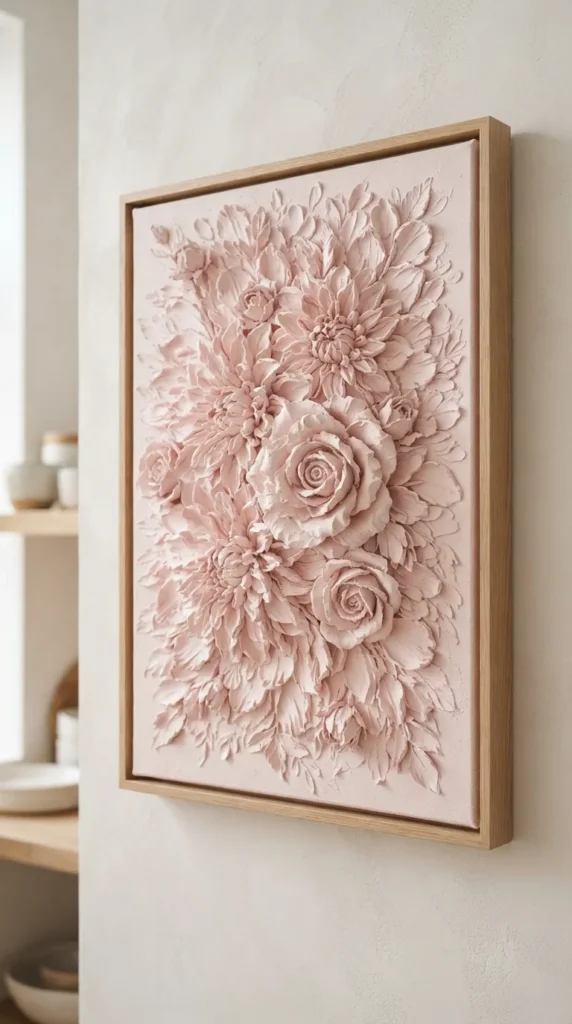
Perfect for a soft, feminine aesthetic, this idea uses palette knives to sculpt individual flower petals. Scoop up thick plaster on the back of your knife and press it onto the canvas, pulling the knife inward to create a raised, realistic petal shape. Arrange these petals in overlapping circles to build stunning, 3D dahlias, roses, or daisies. Keep the entire canvas painted in a single soft tone, like pastel pink or soft ivory, for a classy finish.
15. The Crushed Velvet Drag
Create a luxury velvet effect with minimal effort. Spread a thick layer of plaster and, using a wide plastic smoother or a piece of cardboard, drag the tool across the wet surface in random, sweeping “S” motions. This creates alternating smooth and rough patches that catch the light from different angles, perfectly mimicking the luxurious, light-shifting quality of crushed velvet fabric.



16. Emerald Forest Bark
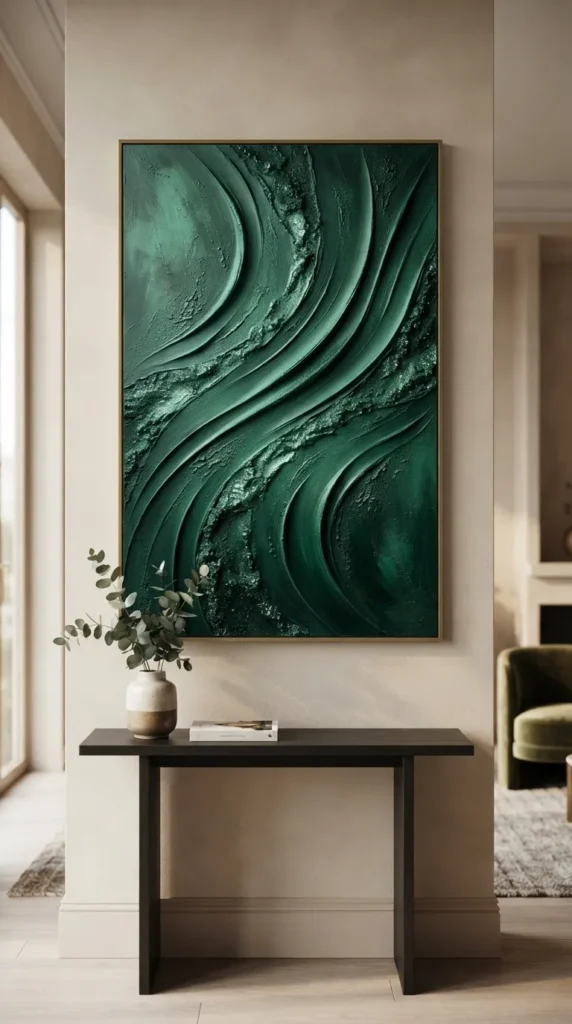
Embrace organic textures by replicating the deep, protective bark of ancient trees. Apply vertical, thick columns of plaster down the length of your canvas. Use a fork or a pointed wooden skewer to carve deep, irregular, vertical grooves and knots into the surface. Paint the final dried piece in a rich, moody emerald green or forest green, letting the dark pigment settle into the deep grooves for added drama.
17. Scalloped Mermaid Scales
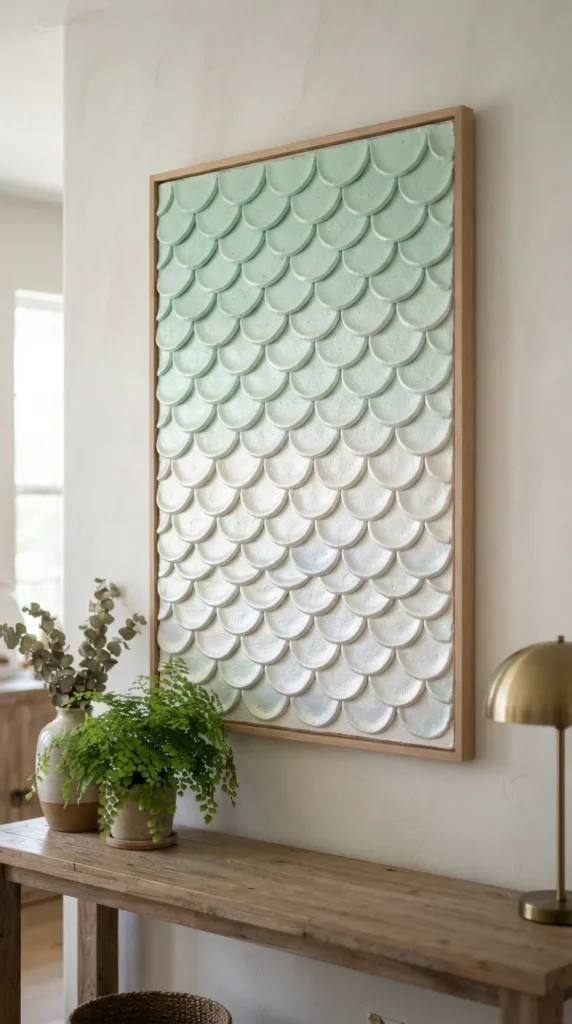
For a whimsical yet highly structured look, create a scalloped scale pattern. You can use a round-tipped palette knife or even the back of a soup spoon. Starting at the bottom of the canvas, press the tool into the plaster to make a curved imprint, then pull it upward. Repeat this process in offset horizontal rows, working your way to the top. The resulting scale pattern looks beautiful painted in soft pastel mint, lavender, or shimmering pearl white.
18. Minimalist Split-Panel Diptych
Diptychs (two-panel art sets) look incredibly professional when hung side-by-side. Lay two canvases next to each other and apply plaster in continuous, sweeping lines that cross from one canvas directly onto the other. When you hang them up with a small gap in between, the texture will visually connect the two pieces, creating a grand, intentional, and high-end gallery installation.
19. Sand and Stone Dune Desert
Bring the serene, meditative quality of desert dunes into your living space. Blend a cup of fine craft sand directly into your plaster mix to give it an authentic, earthy grit. Use a wide, curved scraper to build gentle, sloping, diagonal drifts across the canvas. Paint the dried piece in soft, warm desert tones like sand, peach, terracotta, and soft cream to create a calming, sun-drenched oasis on your wall.
20. The Elegant Gold Leaf Crinkle
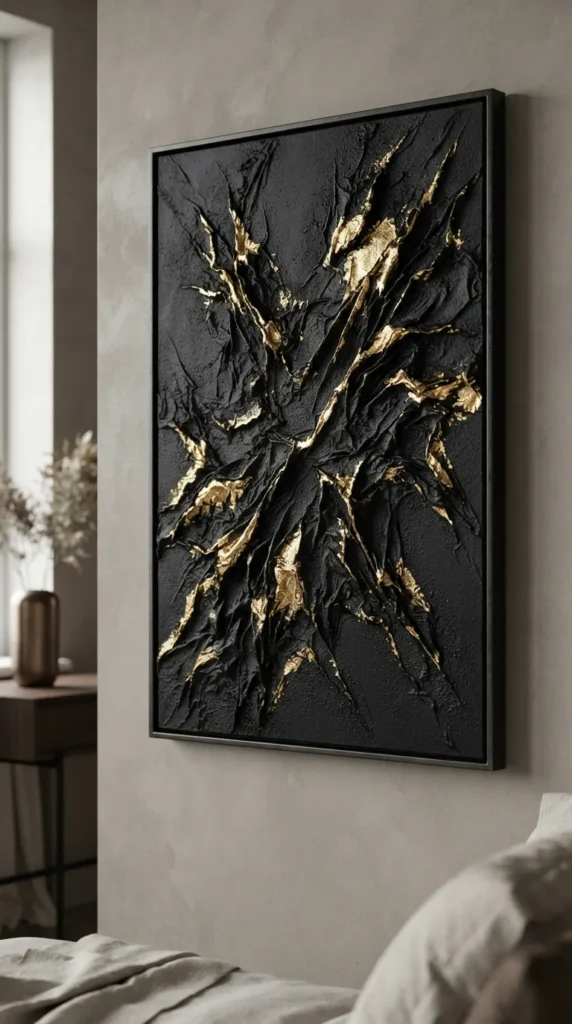
For the ultimate touch of luxury, combine raw plaster texture with brilliant metallic accents. Crumple up aluminum foil or plastic wrap and press it into a thick layer of plaster to create sharp, crinkly ridges. Once the plaster is dry, paint the entire canvas a matte black, charcoal grey, or deep navy. Finally, apply a thin layer of gilding adhesive to the highest peaks of the plaster ridges and press gold leaf sheets onto them for a stunning, high-contrast, gilded finish.
Conclusion
Plaster painting is a wonderful, therapeutic creative outlet that allows you to design custom art tailored perfectly to your home’s color scheme and style. From minimalist, soothing arches to bold, gilded textures, the possibilities are virtually endless. All you need is a canvas, a tub of compound, and a willingness to get your hands a little dusty.