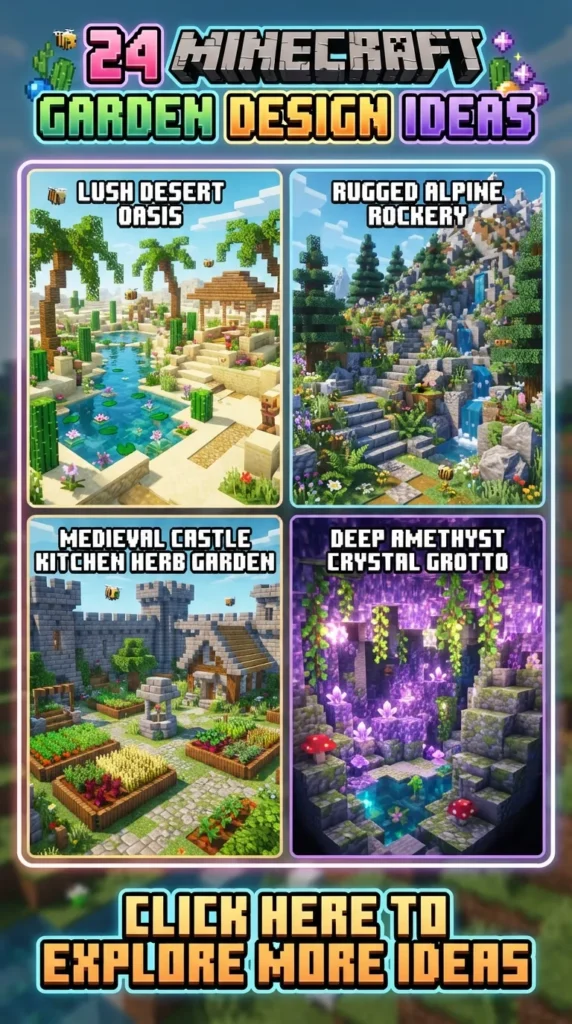
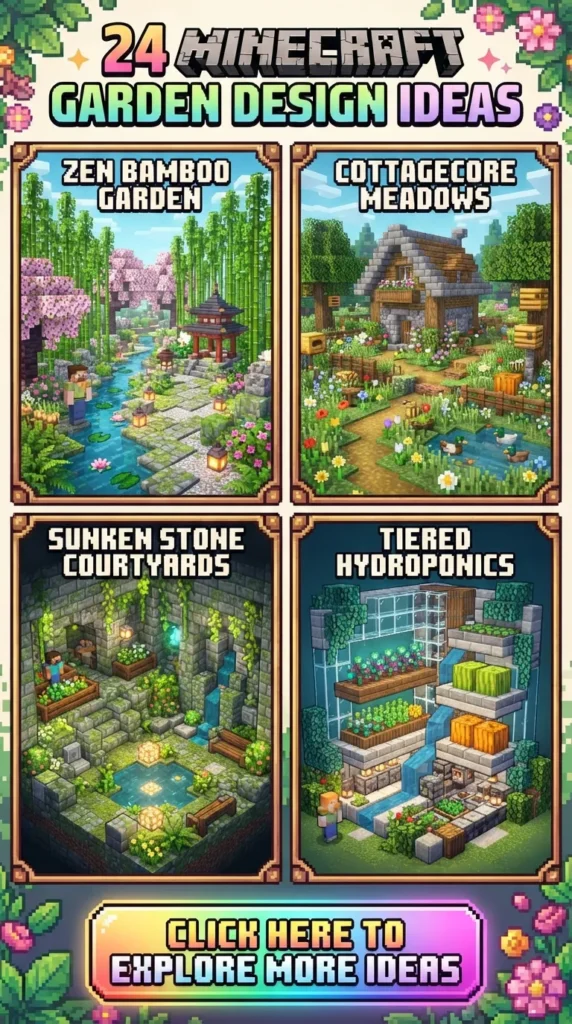
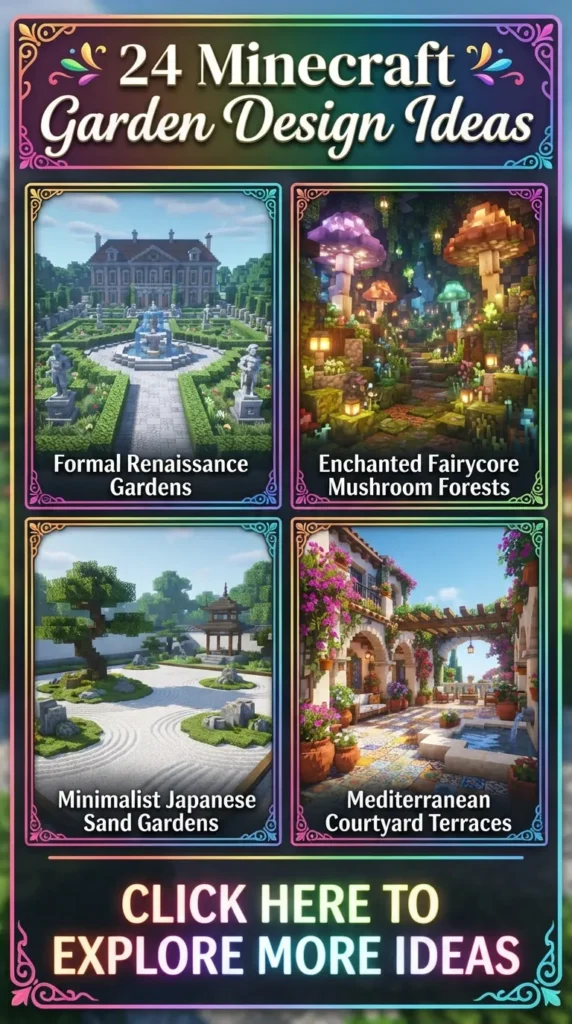
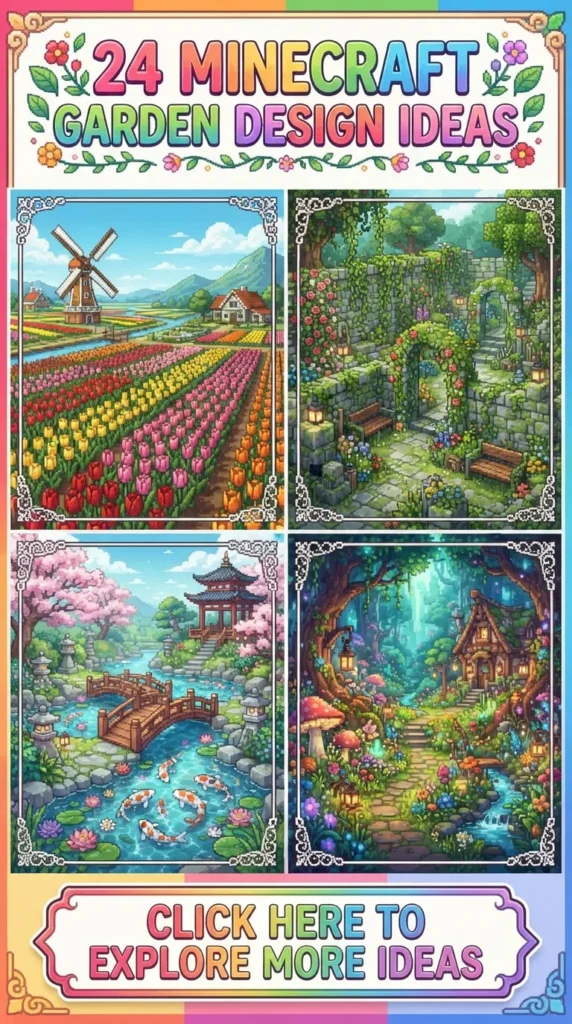
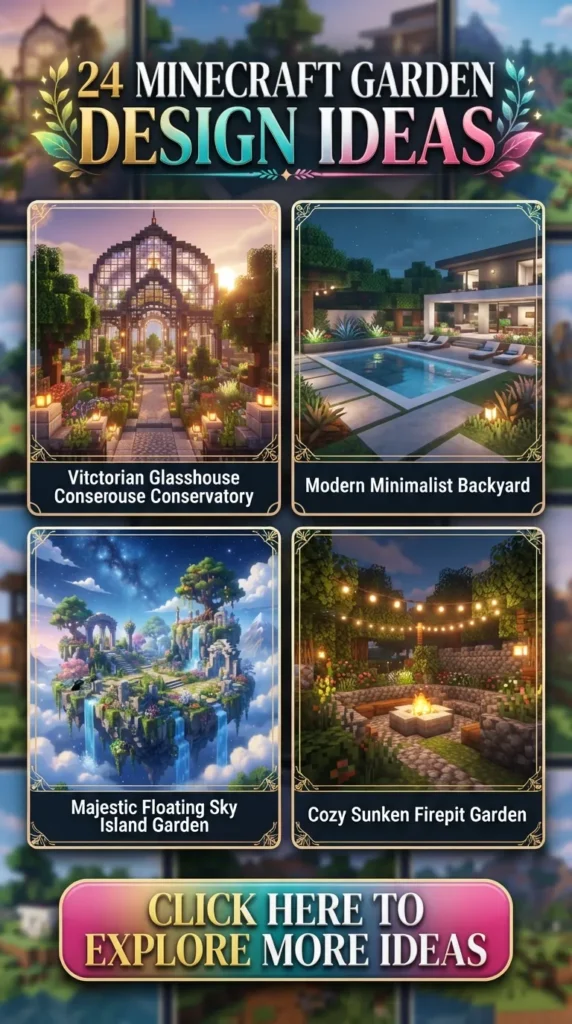
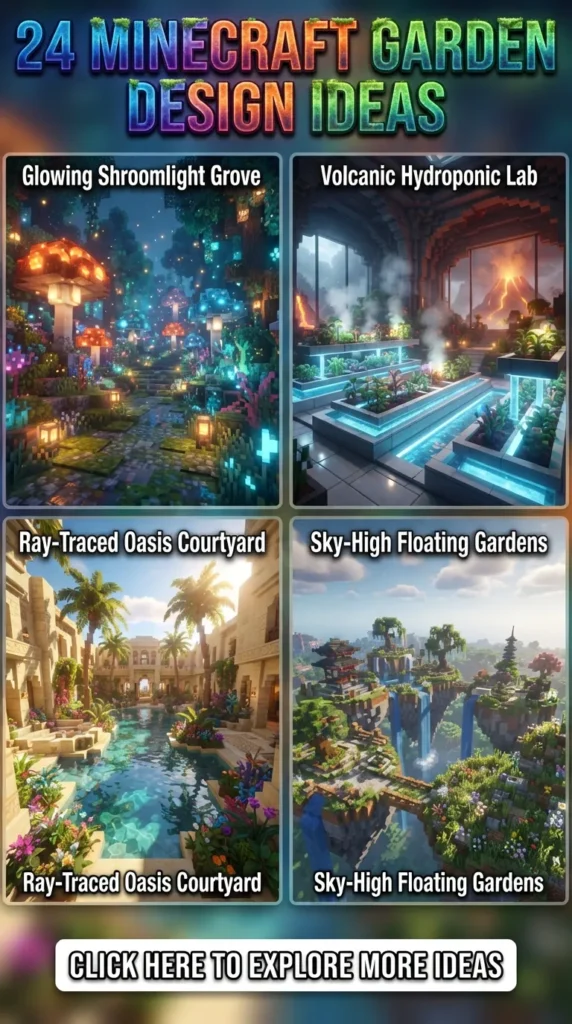
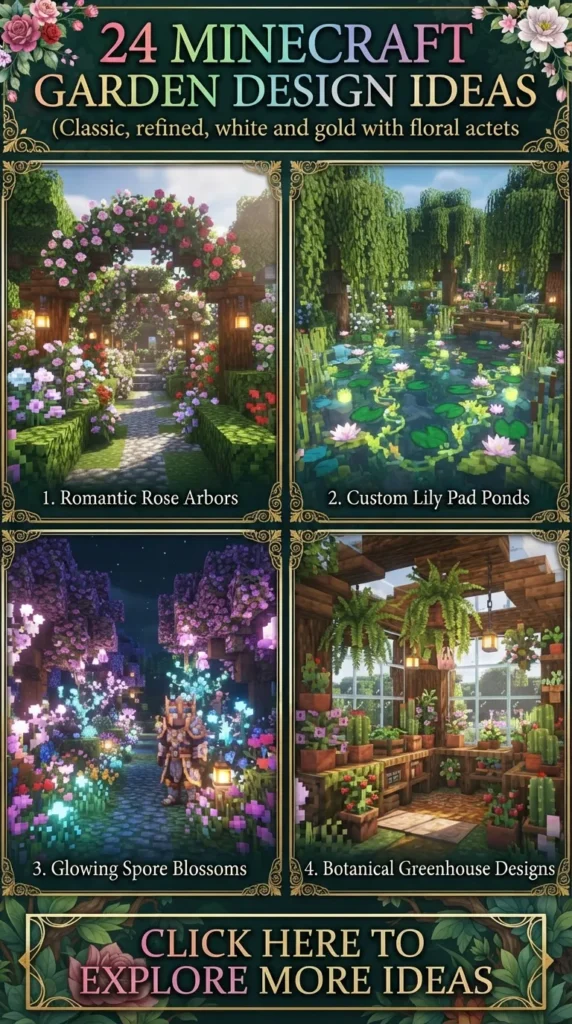
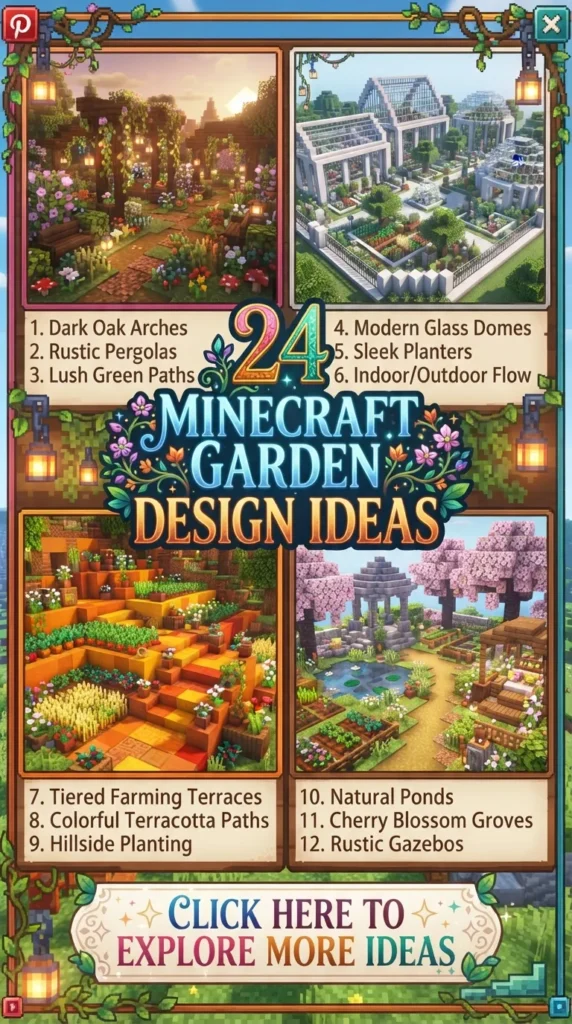
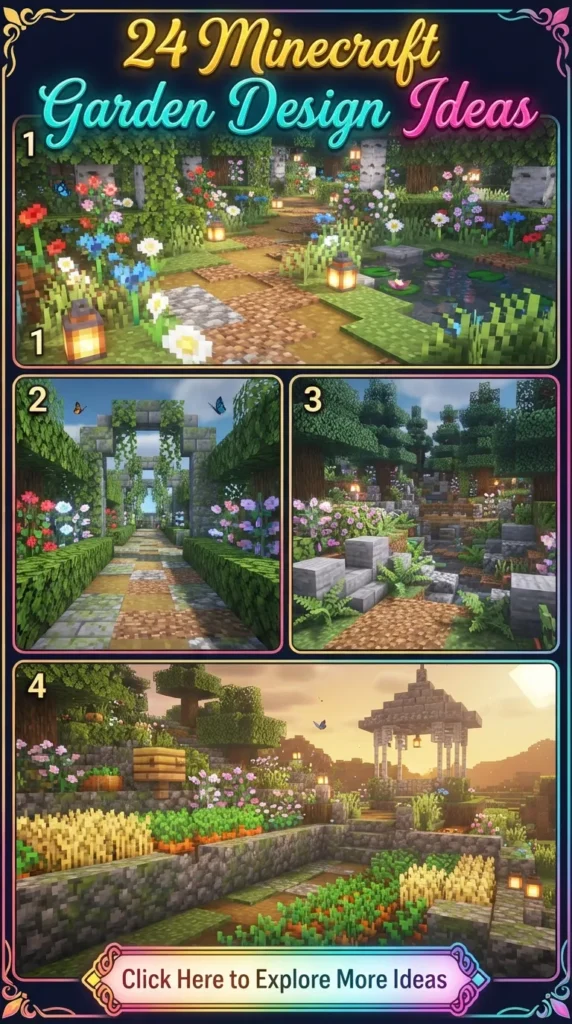
Transforming your Minecraft build from a simple shelter into a breathtaking home often comes down to the landscape. A well-designed garden breathes life, color, and character into your survival or creative world. Whether you prefer tranquil zen retreats, overgrown botanical sanctuaries, or structured medieval courtyards, thoughtfully crafted outdoor spaces bridge the gap between artificial structures and natural terrain.
Below are 20 unique, realistic, and aesthetic Minecraft garden design ideas. Each section breaks down the core aesthetic, step-by-step construction, variations, and necessary materials to help you build your dream outdoor landscape.
1. The Enchanted Zen Bamboo Sanctuary
Introduction
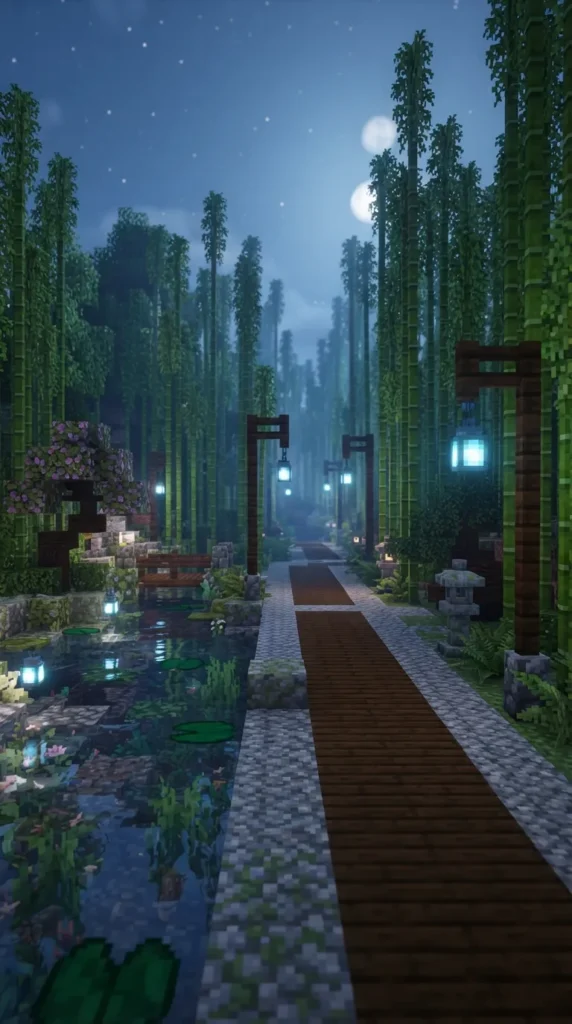
The Enchanted Zen Bamboo Sanctuary brings peace, height, and subtle ambient lighting to your backyard. Inspired by traditional East Asian gardens, this design focuses on tall bamboo stalks, soft water features, dark wood accents, and glowing lanterns.
What This Idea Means
This concept emphasizes minimalism, balance, and verticality. Rather than packing every block space with flowers, it uses negative space, gravel paths, and light source layering to create a quiet, meditative atmosphere.
How to Make It
- Prepare the Base: Clear a circular or organic oval plot. Replace the top grass layer with Gravel, Coarse Dirt, and Stripped Dark Oak logs placed horizontally to form smooth gravel paths.
- Plant Bamboo & Ferns: Plant Bamboo in staggered clusters of varying heights. Surround the bases with Large Ferns, Moss Carpet, and Azalea Leaves.
- Add a Central Pond: Dig out a shallow 3×3 or 4×4 pond. Line the edges with Moss Blocks, Smooth Basalt, and Andesite. Add Lily Pads and Seagrass inside.
- Lighting & Accents: Suspend Soul Lanterns or regular Lanterns from Dark Oak Fences. Add a few Shoji-style banners or Dark Oak Trapdoor features around the perimeter.
Tips and Variations
- Pudding Effect: Use String on top of individual Bamboo stalks to freeze their height growth at varied levels.
- Cherry Blossom Fusion: Mix Cherry Blossom Leaves alongside the bamboo for a splash of pink.
Needs & Materials
- Bamboo
- Moss Carpet & Moss Blocks
- Gravel & Coarse Dirt
- Dark Oak Fences, Slabs, and Trapdoors
- Lanterns or Soul Lanterns
- Water Bucket, Lily Pads, Seagrass
2. Cottagecore Overgrown Wildflower Meadow
Introduction
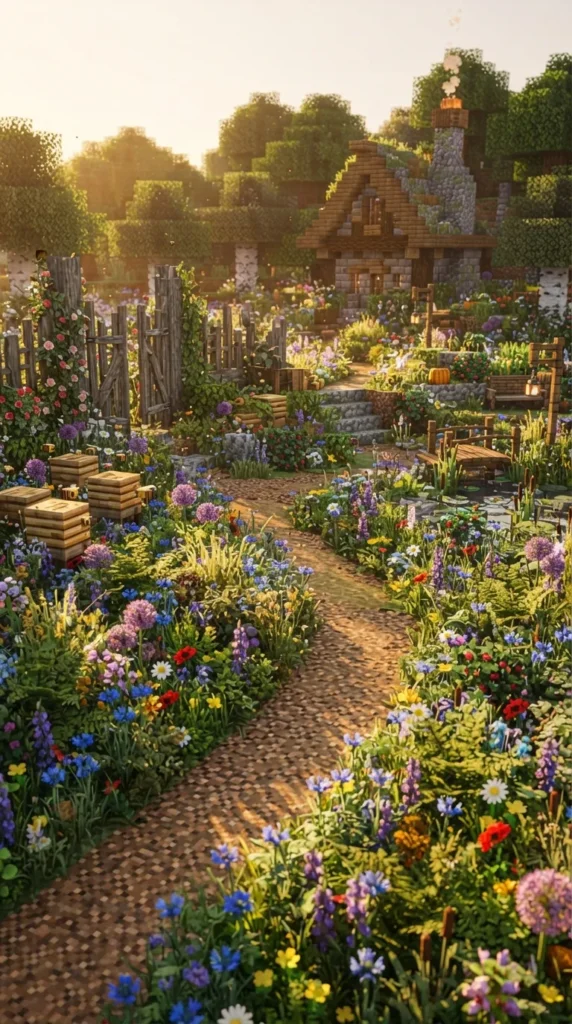
If you love vibrant colors, natural disorder, and warm rustic aesthetics, the Cottagecore Wildflower Meadow is an essential garden design. It feels effortlessly grown rather than meticulously planted.
What This Idea Means
Instead of rigid geometric flowerbeds, this design relies on texture stacking, density, and natural color blending to mimic an untamed rustic countryside garden.
How to Make It
- Terrain Sculpting: Build subtle 1-to-2-block elevation shifts using Grass Blocks, Moss Blocks, and Mud.
- Layering Vegetation: Place Tall Flowers (Paeonia, Rose Bushes, Sunflowers) toward the back and smaller flowers (Cornflowers, Alliums, Oxeye Daisies, White Tulips) toward the front.
- Pathing: Create a winding, worn trail using Path Blocks, Coarse Dirt, and Rooted Dirt mixed with occasional Cobblestone buttons.
- Fencing & Decor: Surround the meadow with broken Spruce Fences, Composters, Beehives, and Hay Bales to complete the farmstead feel.
Tips and Variations
- Bee Haven: Place Bee Nest blocks inside Flowering Azalea Leaves to keep bees actively pollinating your blossoms.
- Cozy Seating: Add a quick bench using Spruce Stairs and Signs on the side.
Needs & Materials
- Various 1-block and 2-block Flowers
- Bonemeal
- Grass, Moss, Mud, Coarse Dirt
- Spruce Fences & Gateways
- Beehives & Hay Bales
3. Sunken Sunken Botanical Courtyard
Introduction
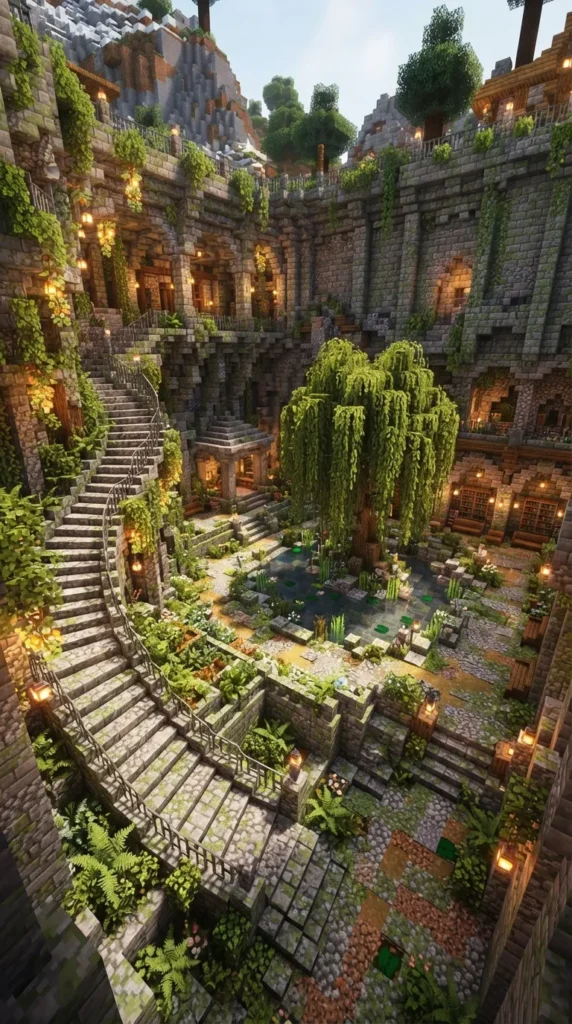
Built lower than the surrounding terrain, a sunken courtyard offers privacy, intimacy, and striking visual depth to modern or stone-based builds.
What This Idea Means
By dropping the garden floor 3 to 5 blocks below surface level, you create an enclosed greenhouse-like outdoor room surrounded by terraced plant display walls.
How to Make It
- Dig the Pit: Excavate a rectangular area 4 blocks deep (e.g., 12×12 blocks).
- Build Terraced Walls: Line the perimeter walls with Stone Bricks, Cobblestone, and Mossy Cobblestone. Inset shelves into the walls for leaf blocks and hanging vines.
- Central Feature: Place a small central fountain or a stylized custom tree (using Oak Logs and Flowering Azalea Leaves).
- Access Stairway: Build a winding Stone Brick staircase leading down into the courtyard. Add Glow Lichen and Hanging Roots to the walls.
Tips and Variations
- Glass Ceiling: Cover the top with Tinted or Stained Glass to create an underground greenhouse vibe.
- Cozy Pit Fire: Add a sunken firepit made of Netherrack concealed under Iron Bars or Campfires.
Needs & Materials
- Stone Bricks, Mossy Stone Bricks, Andesite
- Flowering Azalea Leaves & Vines
- Oak Logs & Hanging Roots
- Stair blocks, Slabs
- Water Bucket
4. Hanging Hydroponic & Tiered Garden
Introduction
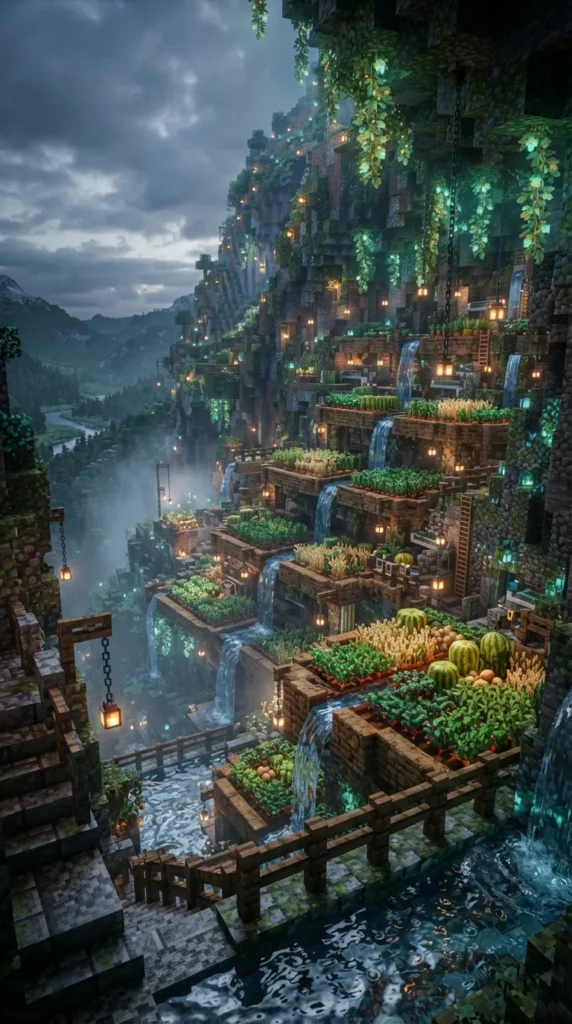
Perfect for hillside homes or compact mountain bases, tiered hydroponic gardens stack greenery vertically down cliff faces or terraced steps.
What This Idea Means
This style combines functional crop farming with decorative landscaping. Water flows down structured steps to nourish crops while maintaining a clean, industrial-meets-nature look.
How to Make It
- Build Terraces: Construct 3 to 4 descending terraces out of Smooth Quartz, Mud Bricks, or Dark Oak Slabs.
- Channel Water Flow: Dig a 1-block wide channel at the back of each terrace and fill it with water logged stairs.
- Plant Layout: Alternate between decorative leaf blocks, Wheat, Beetroot, and Flowering Azaleas.
- Hanging Elements: Attach Chain blocks to the overhangs and suspend Leaf blocks wrapped in Glow Berries down the side walls.
Tips and Variations
- Automatic Look: Add Pistons and Redstone Lamps to give it an automated futuristic greenhouse aesthetic.
- Vines & Cave Vines: Use Cave Vines with Glow Berries to add built-in dynamic lighting.
Needs & Materials
- Mud Bricks / Quartz / Wood Slabs
- Water Buckets
- Farmland & Seeds
- Cave Vines & Glow Berries
- Chains & Lanterns
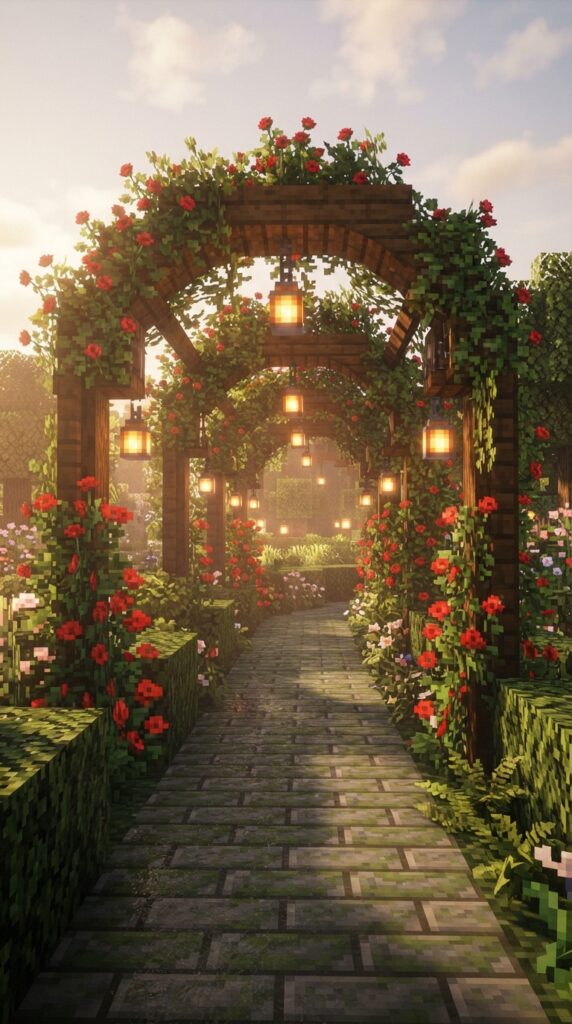
5. Romantic Rose Arbor & Pergola Walkway
Introduction
A Rose Arbor creates a grand, romantic entrance to your estate or pathway, featuring archways draped in lush roses and glowing lighting.
What This Idea Means
This feature acts as a lush green tunnel that guides players along a main path, making large outdoor spaces feel unified and grand.
How to Make It
- Build Wooden Arches: Construct series of inverted U-shaped arches using Spruce Logs, Fences, and Trapdoors spaced 3 blocks apart.
- Drape Vegetation: Cover the arches with Oak Leaves, Birch Leaves, and Rose Bushes placed along the sides.
- Lighting: Hang Lanterns beneath the peak of each archway.
- Paved Path: Pave the walkway underneath with Polished Andesite, Stone Brick Slabs, and Mossy Cobblestone.
Tips and Variations
- Wisteria Alternative: Swap Rose Bushes and Oak Leaves for Amethyst Clusters and Pink Petals to create a magical pink/purple tunnel.
- Benches: Inset small seating nooks along the sides of the arbor.
Needs & Materials
- Spruce Logs, Fences, Trapdoors
- Leaf Blocks (Oak/Birch)
- Rose Bushes
- Polished Andesite & Stone Bricks
- Lanterns
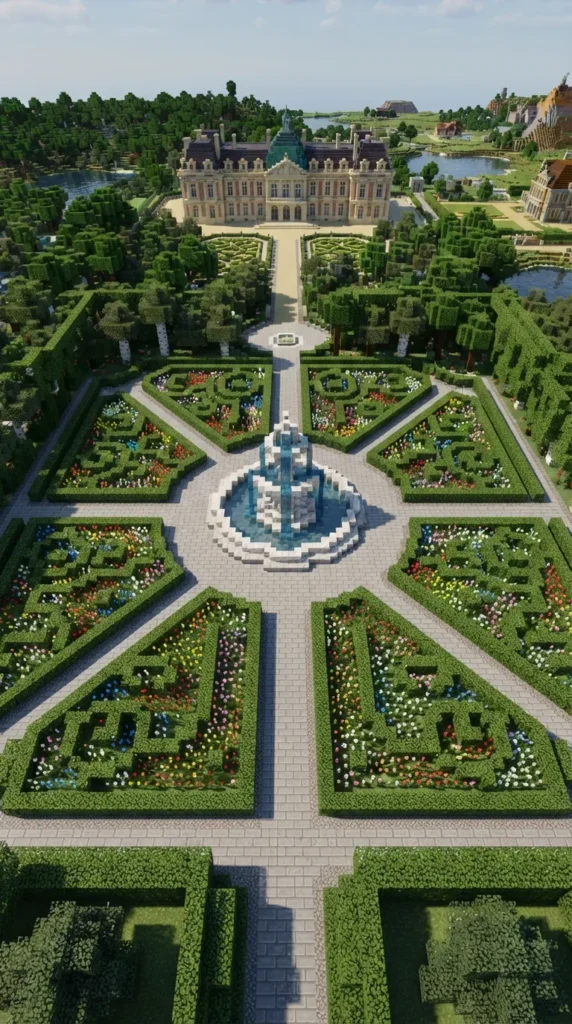
6. Formal Renaissance Parterre Garden
Introduction
Inspired by European palace grounds, the Renaissance Parterre garden focuses on precise symmetry, clipped hedges, and geometric elegance.
What This Idea Means
This style replaces wild natural growth with controlled, pristine geometry. It is best suited for grand castles, mansions, and formal estates.
How to Make It
- Flatten the Ground: Clear a large rectangular field and lay out a perfectly symmetrical grid using Smooth Stone or Quartz Slabs.
- Form Hedges: Use Oak Leaves or Spruce Leaves to outline geometric patterns—diamonds, concentric squares, or scrolls.
- Fill Pattern Interiors: Fill the inside of hedge shapes with vibrant single-color flowers (e.g., Red Tulips in one section, Blue Orchids in another).
- Centerpiece Fountain: Place a symmetrical tier water fountain right in the center intersection.
Tips and Variations
- Color Blocks: Substitute flower beds with colored Concrete Powder or Wool for extra crisp geometric patterns.
- Topiary Sculptures: Add small topiary trees made of Fence posts topped with green Wool or Sponge blocks.
Needs & Materials
- Leaf Blocks (Oak or Spruce)
- Quartz or Smooth Stone Slabs
- Vibrant Flowers (Tulips, Orchids, Lilies)
- Water Bucket (for center fountain)
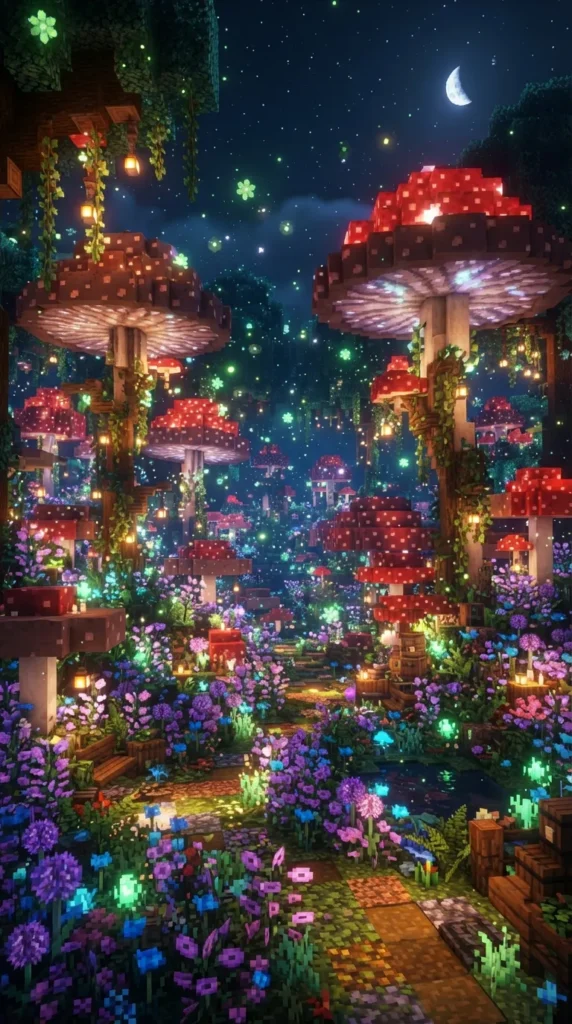
7. Fairycore Glowing Mushroom Grove
Introduction
Bring high fantasy into your world with a glowing mushroom garden that shines brightest at night.
What This Idea Means
This design relies on bioluminescent blocks, custom giant mushrooms, and magical purple/pink foliage to build an ethereal, enchanted forest nook.
How to Make It
- Terrain Foundation: Cover the ground in Podzol, Mycelium, Moss, and Mud.
- Build Custom Mushrooms: Construct custom giant red and brown mushroom caps using Red Mushroom Blocks, Brown Mushroom Blocks, and Mushroom Stems.
- Add Luminescence: Hide Shroomlights, Sea Lanterns, or Ochre Froglights underneath leaf layers and carpet.
- Magic Details: Scatter Spore Blossoms from overhead canopy trees to create falling green particles. Add Amethyst Clusters, Alliums, and Pink Petals across the floor.
Tips and Variations
- Nether Flora Integration: Mix in Crimson and Warped Fungi, Nylium, and Weeping Vines for vibrant alien textures.
- Particle Effects: Ensure Spore Blossoms are placed 5-10 blocks above for maximum drift density.
Needs & Materials
- Red/Brown Mushroom Blocks & Mushroom Stems
- Podzol, Mycelium, Moss Blocks
- Shroomlights / Froglights
- Spore Blossoms
- Amethyst Clusters & Pink Petals
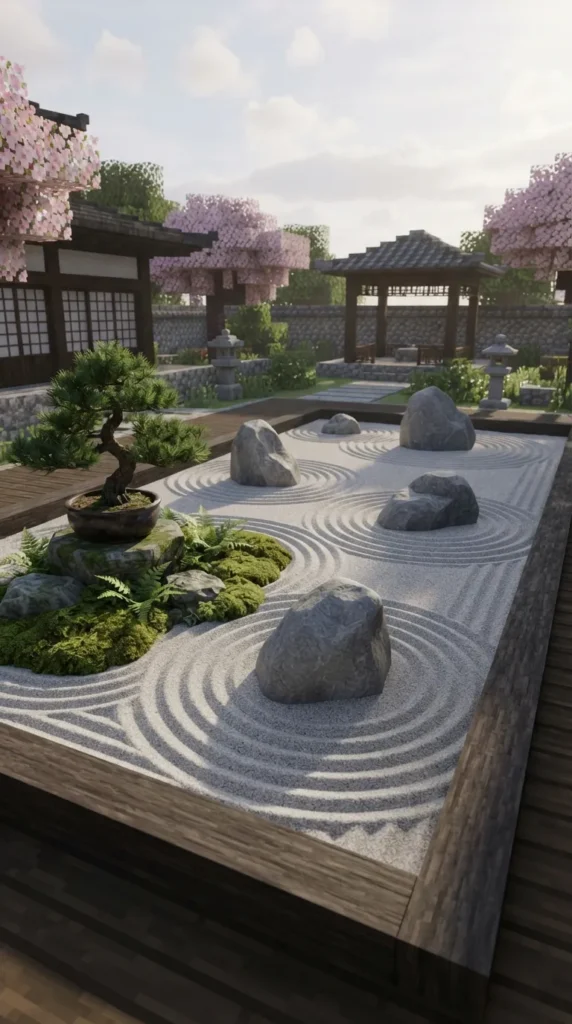
8. Japanese Zen Rock & Sand Garden (Karesansui)
Introduction
A Karesansui is a dry Japanese landscape garden where water is represented by raked sand and gravel, accented by carefully placed boulders and sparse moss.
What This Idea Means
This minimalist design focuses on stillness, structure, and artistic arrangement rather than dense flora, making it ideal for sleek modern or traditional Asian builds.
How to Make It
- Bordering: Enclose a rectangular space using Stripped Dark Oak logs or Polished Deepslate Slabs.
- Raked Sand: Fill the interior floor with Sand, Smooth Sandstone, Birch Planks, or Light Gray Concrete Powder to mimic raked patterns.
- Place Boulders: Group Andesite, Cobblestone, and Tuff blocks in odd-numbered clusters (3s or 5s).
- Accent Moss: Place Moss Carpet or Moss Blocks immediately around the bases of the rock clusters.
Tips and Variations
- Rake Pattern Trick: Mix Birch Trapdoors flush with the ground to create literal “raked grooves” in the sand.
- Potted Bonsai: Place Dead Bushes in Flower Pots with Acacia or Spruce leaves on top to represent miniature bonsai trees around the border.
Needs & Materials
- Sand / Smooth Sandstone / Light Gray Concrete Powder
- Andesite, Tuff, Cobblestone
- Moss Carpet
- Stripped Dark Oak Logs
- Flower Pots & Leaves
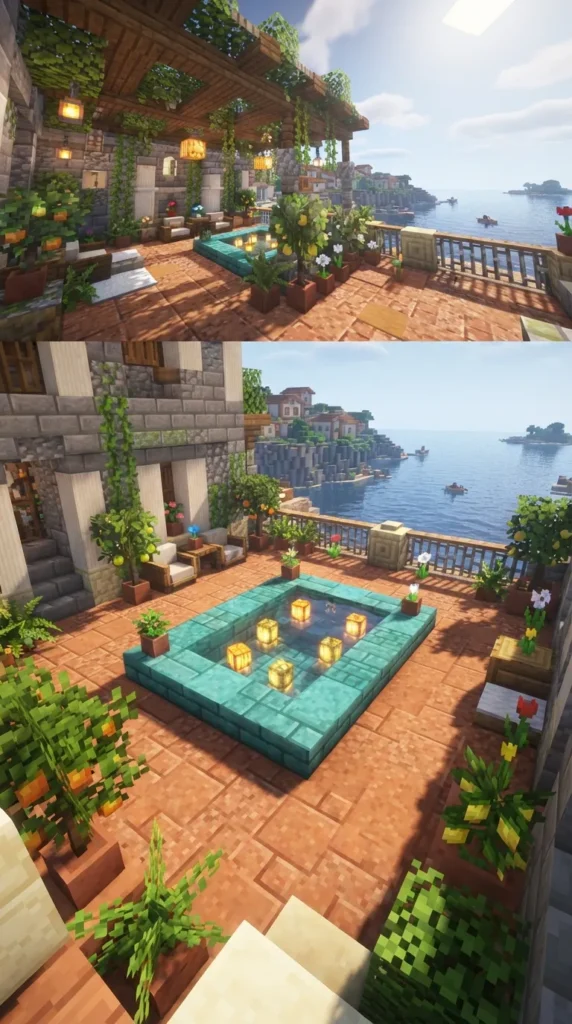
9. Mediterranean Citrus & Terracotta Terrace
Introduction
Warm, sunny, and vibrant, the Mediterranean terrace garden utilizes terracotta pots, warm wood, citrus-toned foliage, and coastal stone features.
What This Idea Means
This aesthetic captures coastal European courtyards using warm color palettes (orange, terracotta, yellow) matched with potted greenery and breezy open pergolas.
How to Make It
- Paving: Floor the area with Terracotta, Granite, Bricks, and Smooth Sandstone.
- Potted Citrus Trees: Place Flower Pots or Decorator Pots with Oak Fences and Flowering Azalea Leaves to mimic potted orange or lemon trees.
- Pergola Overhead: Build an open roof framework using Jungle Wood or Acacia Slabs to let sunlight stream through.
- Water Basin: Add a shallow terracotta-lined basin filled with water and Sea Pickles for subtle illumination.
Tips and Variations
- Custom Fruit Trees: Place Orange Wool or Ochre Froglights inside leafy canopies to look like ripening citrus fruits.
- Vines: Wrap Vines or Cave Vines down columns and walls.
Needs & Materials
- Terracotta, Granite, Bricks
- Flowering Azalea Leaves
- Jungle/Acacia Wood & Slabs
- Pots / Decorated Pots
- Sea Pickles & Water
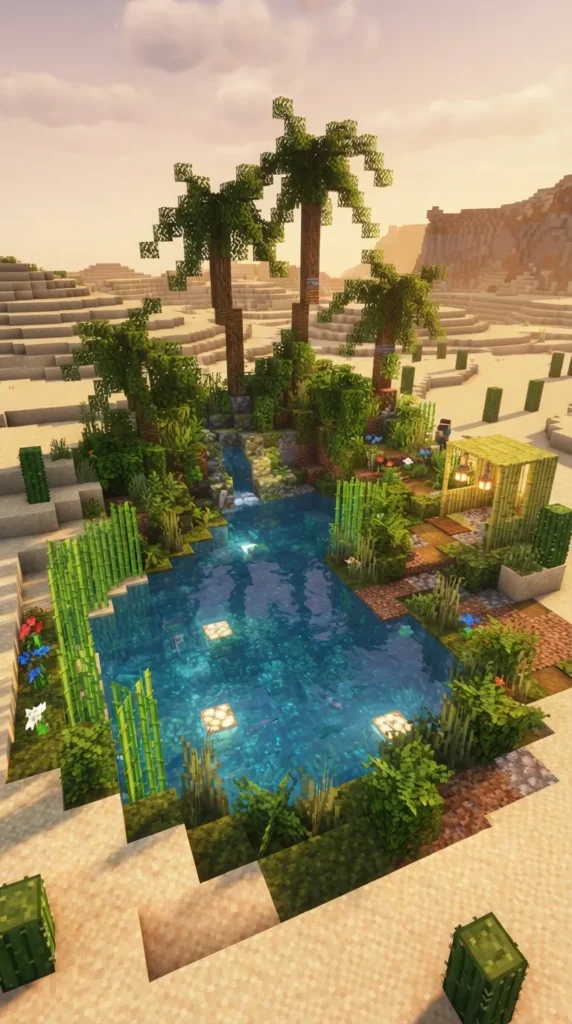
10. Desert Oasis & Succulent Sanctuary
Introduction
Transform barren desert sand into a thriving, lush sanctuary centered around a crystal-clear spring, palm trees, and drought-tolerant greenery.
What This Idea Means
Contrast is key in this design: the stark dryness of Sand and Cut Sandstone surrounding vibrant Moss, Sugarcane, and lush custom palm foliage.
How to Make It
- Water Source: Dig an organic, winding pond in the middle of sand dunes.
- Oasis Shoreline: Edge the water with Moss Blocks, Mud, Grass, and Sugarcane.
- Custom Palm Trees: Build curved tree trunks using Jungle Wood or Stripped Jungle Logs. Cap them with large umbrella-like canopies of Jungle Leaves.
- Desert Flora: Scatter Cactus, Dead Bushes in pots, Flowering Azaleas, and Sea Pickles underwater.
Tips and Variations
- Warm Lighting: Use Ochre Froglights concealed beneath carpet or underwater for a warm desert glow at night.
- Camel Stable: Integrate a small, shaded shelter with Hay Bales for camels or horses.
Needs & Materials
- Sand & Cut Sandstone
- Moss Blocks & Grass Blocks
- Jungle Logs & Jungle Leaves
- Cactus, Sugarcane, Sea Pickles
- Water Buckets
11. Alpine Rockery & Mountain Cascade
Introduction
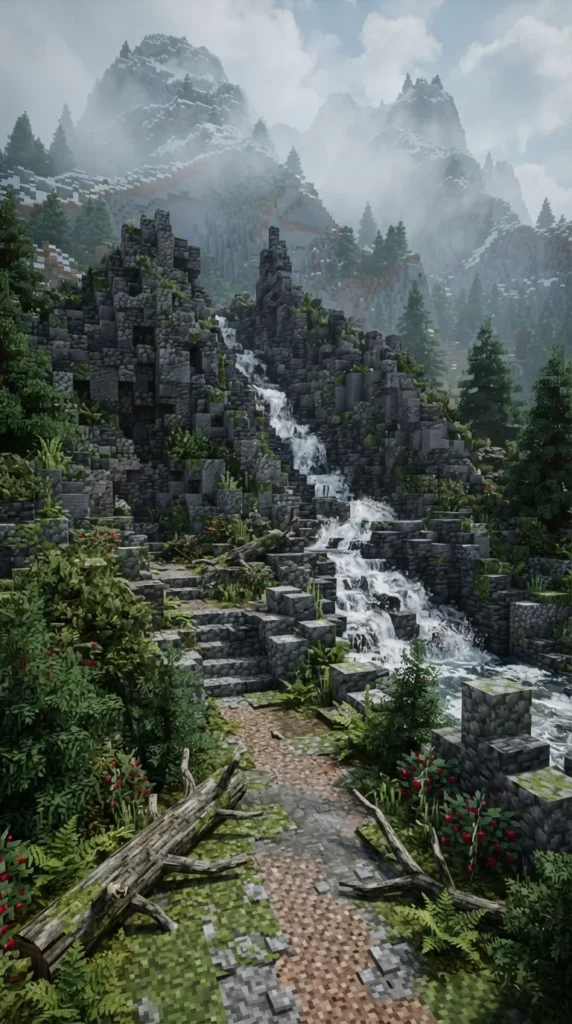
Designed for rugged mountain biomes, the Alpine Rockery combines steep elevation changes, pine foliage, natural stone outcroppings, and rushing streams.
What This Idea Means
This garden embraces harsh natural terrain, making it look as though alpine mountain flora has reclaimed jagged rocky slopes.
How to Make It
- Stone Layering: Mix Andesite, Tuff, Deepslate, and Gravel into steep hillside steps.
- Water Stream: Source a water spring near the top and let it cascade down multiple rock ledges into a mountain pool.
- Pine Flora: Plant Sweet Berry Bushes, Spruce Saplings, Ferns, and Moss Carpet along the rock crevices.
- Detailing: Place Pale Oak or Spruce Logs as fallen timber, accented with Brown Mushrooms.
Tips and Variations
- Snow Traces: Sprinkle Powder Snow or Snow Layers on high rock ledges for a realistic alpine atmosphere.
- Lichen Details: Add Glow Lichen to stone surfaces for subtle night lighting.
Needs & Materials
- Tuff, Andesite, Gravel, Cobblestone
- Spruce Leaves & Sweet Berry Bushes
- Ferns & Large Ferns
- Moss Carpet
- Water Bucket
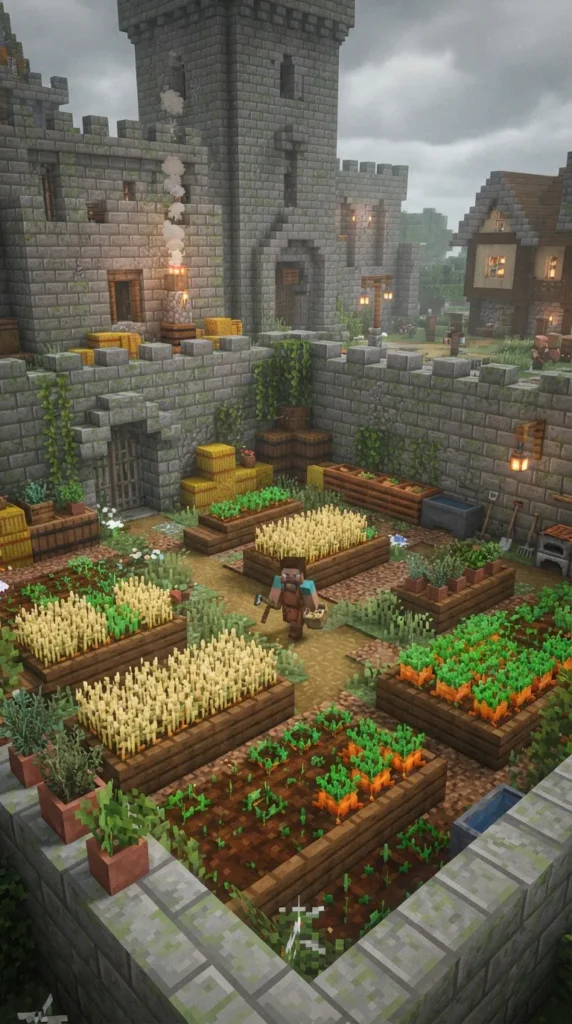
12. Medieval Castle Herb & Kitchen Garden
Introduction
Practical yet charming, the Medieval Kitchen Garden combines functional crop farming with rustic stone pathways and medieval timber framework.
What This Idea Means
Historical medieval castles relied on dedicated internal gardens for food and medicine. This design brings functional agricultural survival crops into an organized, rustic courtyard layout.
How to Make It
- Enclosure: Build a perimeter wall out of Cracked Stone Bricks, Cobblestone, and Oak Fences.
- Crop Beds: Create raised 3×3 crop boxes using Spruce Trapdoors or Logs. Plant Wheat, Carrots, Potatoes, and Beetroots.
- Compost & Tools: Place Composters, Water Cauldrons, Barrels, and Hay Bales in the corners to look like an active work area.
- Pathway: Lay down a messy path made of Coarse Dirt, Gravel, and Path Blocks.
Tips and Variations
- Scarecrow: Place a Hay Bale topped with a Carved Pumpkin and Leather Armor Stand in the middle.
- Bee Coops: Include Beehives along the wall to increase crop growth speed naturally.
Needs & Materials
- Farmland & Seeds (Wheat, Potato, Carrot)
- Spruce Trapdoors & Logs
- Stone Bricks & Cobblestone
- Composters, Barrels, Cauldrons
- Beehives & Hay Bales
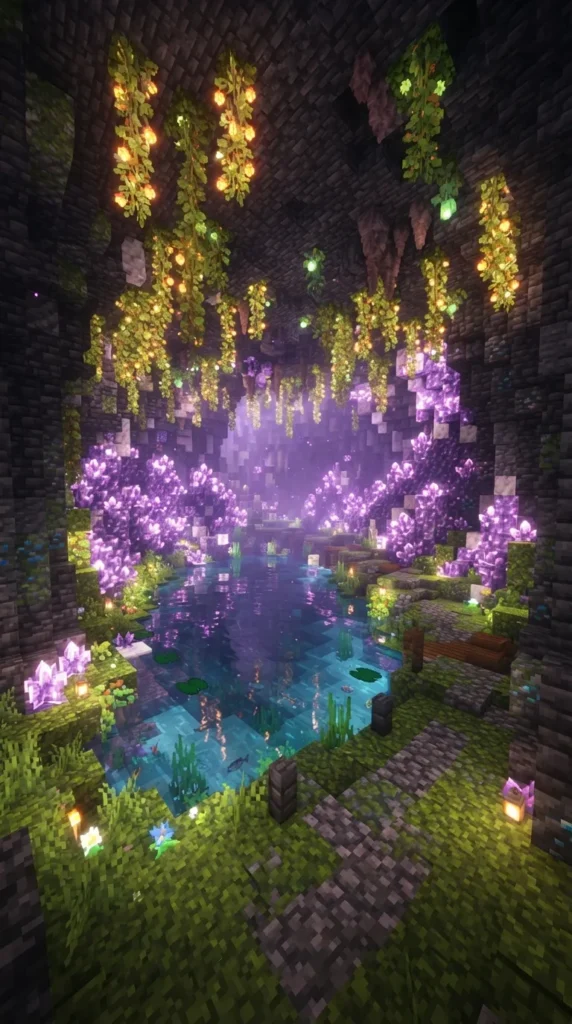
13. Deepslate & Amethyst Crystal Grotto Garden
Introduction
A underground or cave-based garden that trades traditional sunlight and green grass for glowing crystals, dark stones, and mystical subterranean flora.
What This Idea Means
This idea reimagines what a garden can be by utilizing cave biome materials—Amethyst, Moss, Glow Berries, and Sculpted Deepslate—to build a hidden subterranean paradise.
How to Make It
- Cave Chamber: Hollow out a subterranean room with natural curved walls made of Deepslate and Tuff.
- Crystal Water Pool: Dig a central pool lined with Calcite and Smooth Basalt. Fill it with water and place Amethyst Blocks and Clusters underneath.
- Ceiling Vegetation: Hang Chains, Cave Vines with Glow Berries, and Spore Blossoms from the ceiling.
- Floor Detail: Carpet the floor with Moss, Small Amethyst Buds, and Sculpted Sculk or Pitcher Plants for alien textures.
Tips and Variations
- Light Play: Use Amethyst Block alignment alongside concealed Sea Lanterns to create shimmering light reflections through the water.
- Sculk Accents: Carefully place Sculk Veins along the edges for an ancient, mysterious touch.
Needs & Materials
- Deepslate, Tuff, Calcite
- Amethyst Blocks & Clusters
- Cave Vines & Glow Berries
- Spore Blossoms & Moss
- Water Buckets
14. Victorian Glasshouse Conservatory Garden
Introduction
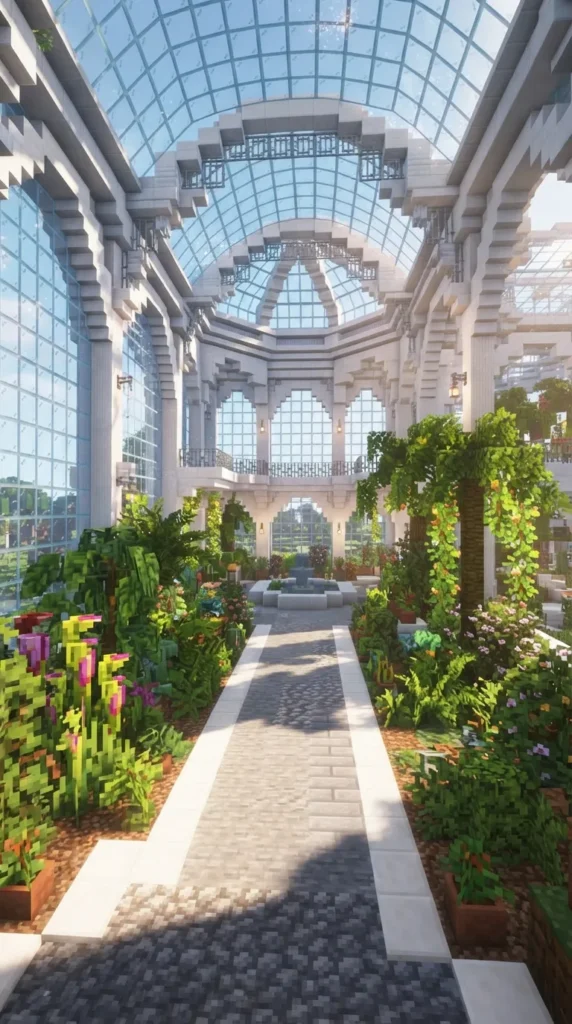
A grand Victorian greenhouse structure housing tropical and exotic plants in an ornate, climate-controlled glass architecture.
What This Idea Means
Combining high-end architecture with interior gardening, this design displays rare plants inside an elegant wrought-iron or white quartz framed glass building.
How to Make It
- Build Framework: Construct a vaulted greenhouse frame using Smooth Quartz or Dark Oak and Iron Bars.
- Glass Panes: Fill large arched windows with Clear Glass or Light Gray Stained Glass.
- Interior Planting: Build raised interior garden beds out of Mud Bricks filled with exotic plants like Pitcher Plants, Sniffer Eggs/Torchflowers, and Big Dripleaf.
- Central Pathways: Pave interior walkways with Polished Diorite or Smooth Stone Slabs.
Tips and Variations
- Hanging Baskets: Hang Leaves and Trapdoors from the glass ceiling beams to simulate hanging baskets.
- Ventilation Aesthetics: Add Iron Trapdoors on the roof to look like operable ventilation hatches.
Needs & Materials
- Glass / Stained Glass Panes
- Quartz / Dark Oak / Iron Bars
- Rare Plants (Torchflower, Pitcher Plant, Big Dripleaf)
- Mud Bricks
- Polished Diorite
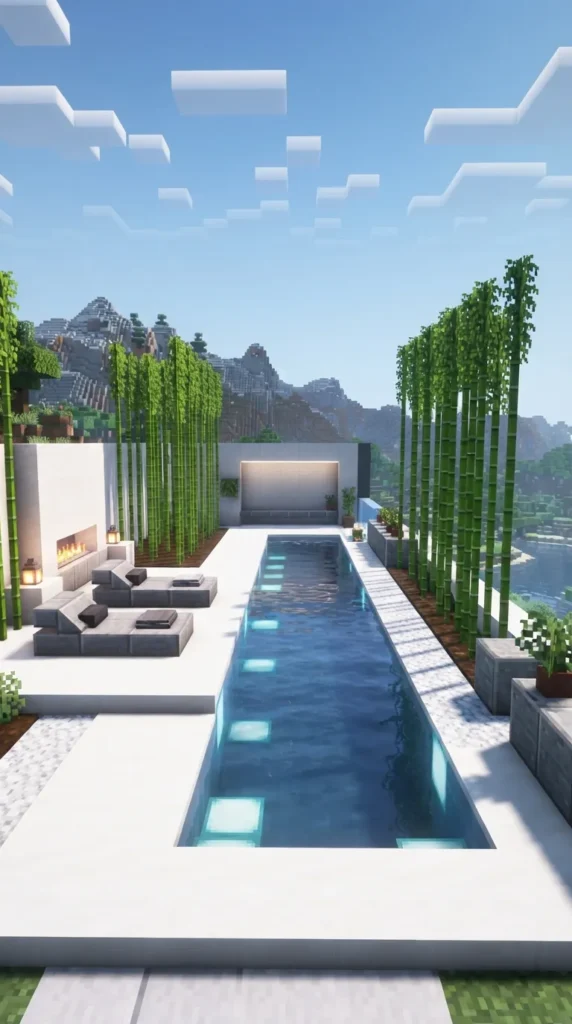
15. Modernist Minimalist Slab & Pool Garden
Introduction
Sleek, architectural, and clean, this garden design relies on sharp angles, smooth textures, geometric water features, and curated plant placement.
What This Idea Means
Designed to complement modern, luxury houses, this style ditches wild clutter in favor of smooth concrete slabs, linear infinity pools, and stark topiary accents.
How to Make It
- Base Paving: Lay large grid tiles using White Concrete, Smooth Quartz Slabs, and Gray Concrete.
- Linear Pool: Construct a long, narrow 2-block deep reflecting pool. Line the bottom with Sea Lanterns beneath Light Blue Stained Glass for a smooth glow.
- Plant Accents: Place single Flowering Azalea or Birch trees in recessed square planter boxes.
- Seating: Build sleek outdoor loungers using Quartz Stairs and Smooth Stone Slabs.
Tips and Variations
- Bamboolines: Line exterior privacy walls with a single, perfectly straight row of Bamboo.
- Fire Trench: Add a long 1-block wide fire trench filled with Netherrack covered in Black Stained Glass or Iron Bars.
Needs & Materials
- White & Gray Concrete
- Quartz Slabs & Smooth Stone
- Sea Lanterns & Light Blue Glass
- Flowering Azalea Leaves
- Bamboo
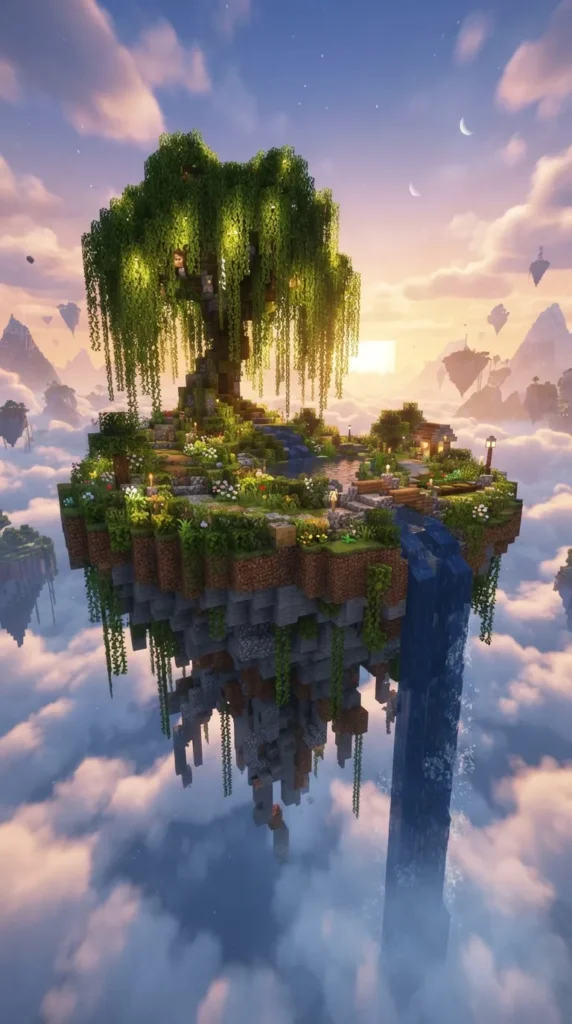
16. Floating Sky Island & Cloud Garden
Introduction
Defy gravity with a mystical floating island garden suspended high above your main base, complete with waterfalls cascading into the sky.
What This Idea Means
Floating island gardens add fantasy and vertical movement to your skyscape, turning mid-air space into lush, detached paradises.
How to Make It
- Build Island Base: Construct an inverted cone shape in the air using Stone, Dirt, and Cobblestone to look like ripped earth.
- Top Soil: Cover the top surface with Grass Blocks, Moss, and Rooted Dirt.
- Water Cascades: Let a water source flow over one edge, spilling down toward the ground below.
- Flora & Trees: Plant a large custom Willow or Cherry Blossom tree. Add hanging Vines and Weeping Willows extending down beneath the island.
Tips and Variations
- Bridge Connections: Connect multiple small floating islands together using Rope Bridges made of Jungle Fences and Spruce Slabs.
- Particle Glow: Place Spore Blossoms on the underside of the island so particles drift through the air below.
Needs & Materials
- Dirt, Grass Blocks, Stone
- Vines & Hanging Roots
- Water Bucket
- Spruce Slabs & Fences
- Spore Blossoms
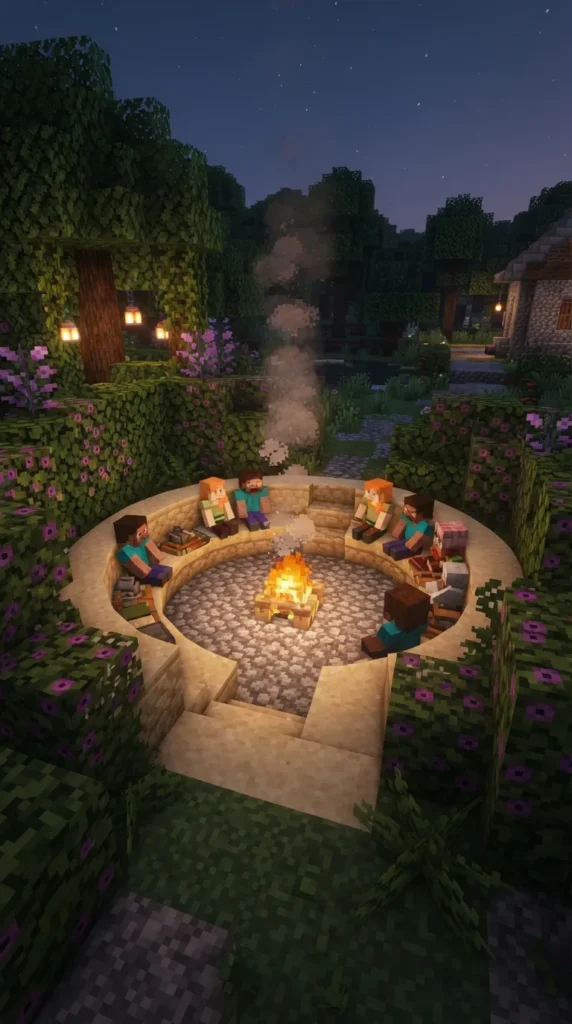
17. Sunken Firepit & Outdoor Conversation Garden
Introduction
A cozy social outdoor space featuring a sunken seating pit centered around a warm campfire, surrounded by terraced floral greenery.
What This Idea Means
This garden design creates a welcoming focal point for multiplayer worlds, combining lighting, seating, and landscaping into an inviting lounge nook.
How to Make It
- Excavate Circular Pit: Dig a 3-block deep circular pit (approx. 7-8 blocks in diameter).
- Build Seating: Line the inner ring with Smooth Sandstone, Spruce Stairs, or Mud Brick Slabs to form a continuous circular bench.
- Centerpiece Fire: Place a Campfire or Soul Campfire in the center, surrounded by Cobblestone Slabs or Trapdoors.
- Terraced Backing: Surround the top rim of the pit with dense Azalea bushes, Sweet Berry Bushes, and Tall Grass to enclose the space.
Tips and Variations
- Smoke Effect: Place a Hay Bale directly beneath the Campfire to make the smoke column rise much higher into the sky.
- Pillow Accents: Use colored Carpets on top of stairs to create cushion accents.
Needs & Materials
- Campfire or Soul Campfire
- Spruce / Sandstone / Mud Brick Stairs & Slabs
- Azalea Bushes & Sweet Berry Bushes
- Hay Bale
- Carpets
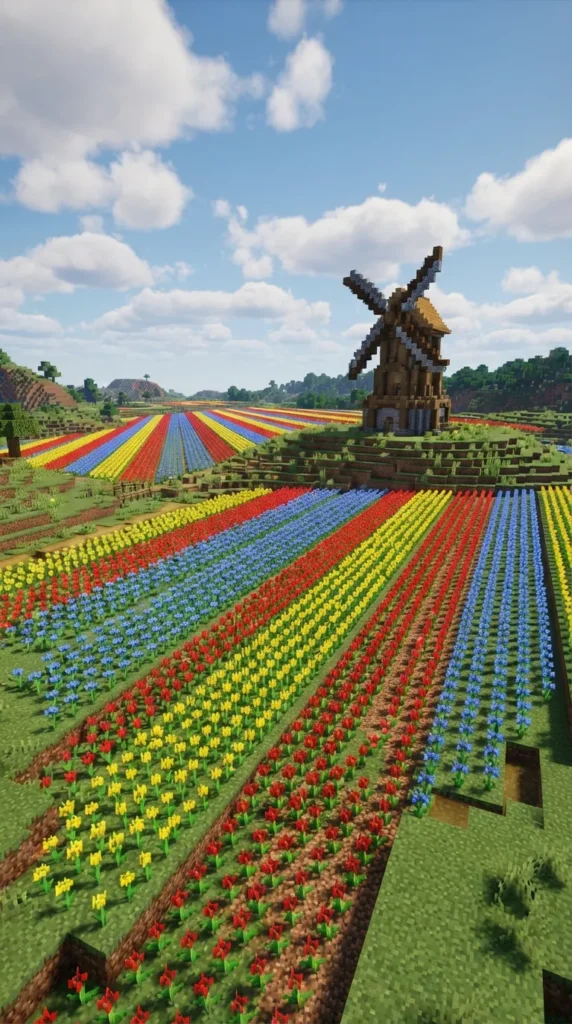
18. Dutch Tulip Field & Windmill Garden
Introduction
Vast, vibrant rows of organized colorful flowers stretching across flat plains, anchored by a rustic medieval or European windmill.
What This Idea Means
This design focuses on dramatic color blocking on a large scale, turning wide open farmland fields into striking visual art visible from high altitudes.
How to Make It
- Layout Stripes: Dig parallel 2-block wide trenches across a large field, separated by 1-block wide dirt paths.
- Plant Monochromatic Flowers: Fill each trench solid with one flower color (e.g., one row of Red Tulips, one row of Orange Tulips, one row of White Tulips, one row of Cornflowers).
- Pathing: Fill the separation trenches with Birch Slabs, Gravel, or Oak Leaves.
- Windmill Accent: Build a tall timber-framed windmill at the head of the fields with wool sails.
Tips and Variations
- Irrigation Details: Hide water logged stairs beneath the flower rows to keep soil hydrated without breaking visual continuity.
- Lighting: Place Redstone Lamps or Glowstone hidden directly under leaf-covered paths.
Needs & Materials
- Large quantities of single-color Tulips and Flowers
- Gravel / Birch Slabs / Oak Leaves
- Wood Logs & Planks (for Windmill)
- White Wool (for sails)
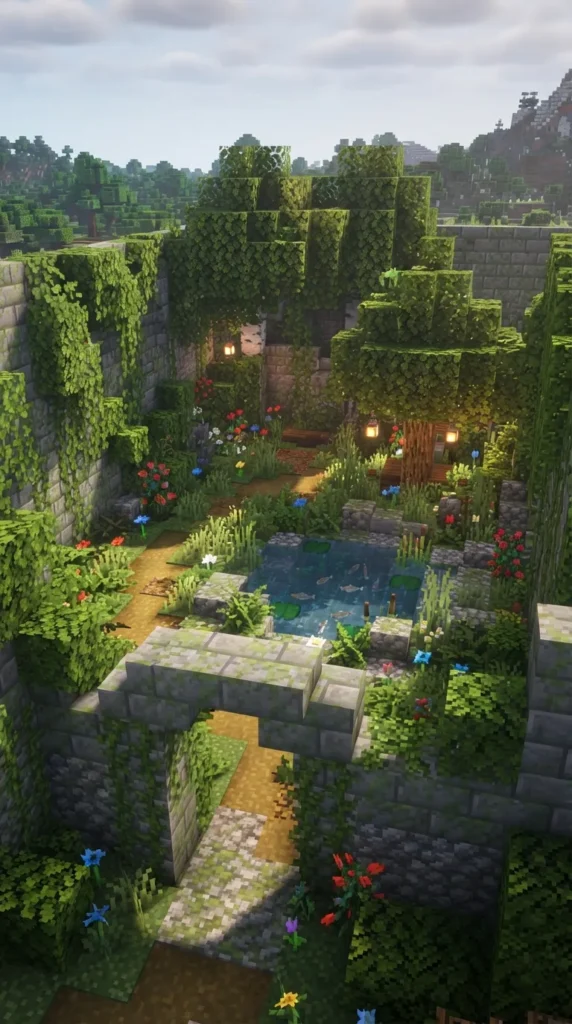
19. Secret Walled Secret Cottage Secret Garden
Introduction
A secluded, mysterious garden hidden completely behind high ivy-covered stone walls, accessible only through a hidden archway or piston door.
What This Idea Means
Inspired by classic literature, this garden creates a sense of discovery and mystery within an estate, hiding an overgrown oasis inside a stone perimeter.
How to Make It
- Enclosing Wall: Build a 5-block tall perimeter wall using Cracked Stone Bricks, Mossy Stone Bricks, and Cobblestone.
- Ivy Draping: Cover the exterior and interior walls generously with Vines, Glow Lichen, and Leaf Blocks.
- Hidden Entrance: Create an arched entrance concealed by thick vines or an iron gate (Iron Bars).
- Interior Oasis: Fill the interior with dense, untamed vegetation, winding dirt trails, a small fish pond, and a cozy park bench.
Tips and Variations
- Redstone Door: Use a simple Piston door hidden behind a waterfall or vine wall to make the entry truly secret.
- Sound Design: Hide Note Blocks under the floor triggering ambient nature sounds or place tamed Parrots nearby.
Needs & Materials
- Mossy & Cracked Stone Bricks
- Vines & Glow Lichen
- Leaf Blocks (Oak/Spruce)
- Iron Bars
- Water Bucket & Fish
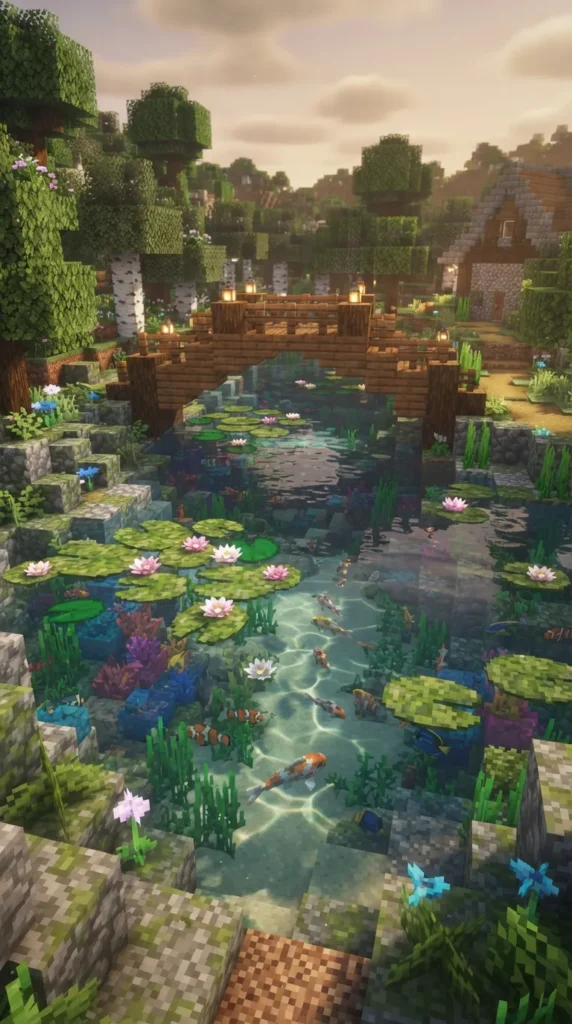
20. Water Lily & Koi Pond Sanctuary
Introduction
A serene aquatic garden built around custom oversized lily pads, clear winding streams, lush water plants, and colorful tropical fish.
What This Idea Means
This concept prioritizes aquatic landscaping, turning plain rivers or backyard pools into dynamic, colorful freshwater ecosystems.
How to Make It
- Pond Digging: Shape a shallow, organic pond (2 to 3 blocks deep) with varied terrain on the bottom using Clay, Moss, and Gravel.
- Custom Big Lily Pads: Construct giant lily pads on the water surface using Green Wool or Moss Blocks topped with Green Carpet.
- Underwater Flora: Plant Sea Pickles, Seagrass, Kelp, and Coral Blocks along the pond floor.
- Add Wildlife: Spawn or bucket Tropical Fish, Axolotls, and Cod into the pond, and place Lily Pads on the surface.
Tips and Variations
- Underwater Glow: Conceal Sea Lanterns beneath Coral Blocks or Gravel to illuminate the water naturally at night.
- Wooden Footbridge: Add a small arched bridge made of Spruce Fences and Slabs curving over the center of the pond.
Needs & Materials
- Clay, Gravel, Moss Blocks
- Green Wool & Green Carpet
- Lily Pads, Seagrass, Sea Pickles, Coral
- Water Buckets
- Tropical Fish Buckets