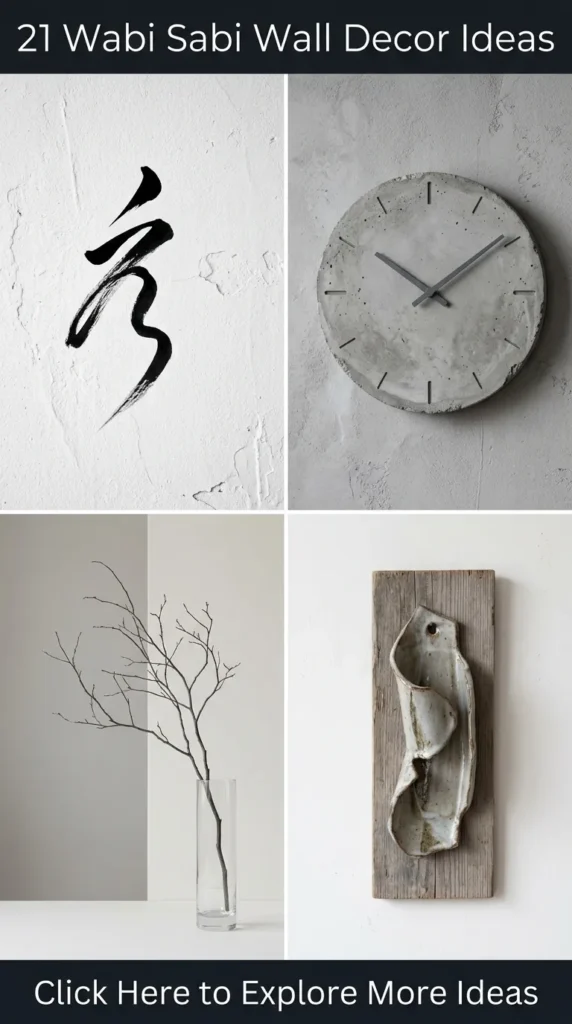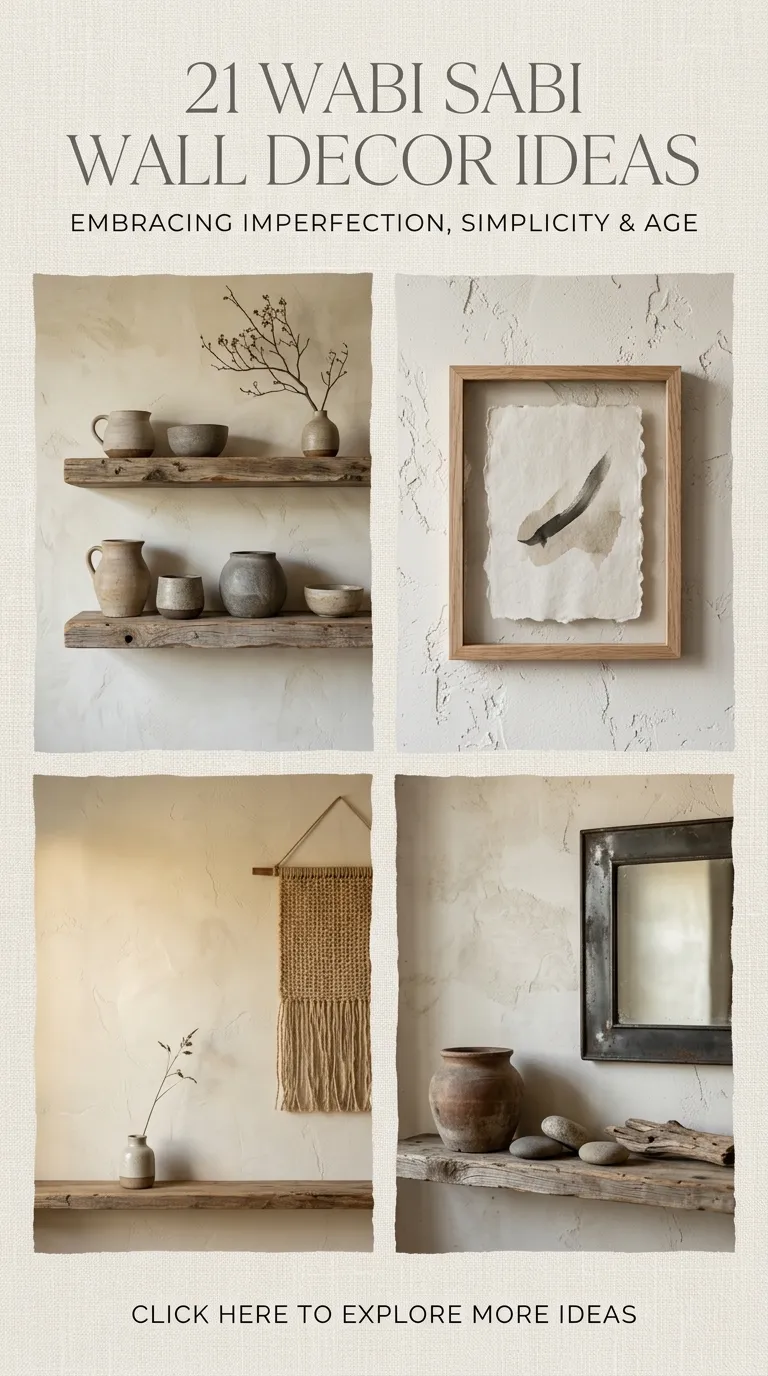
In a world increasingly dominated by mass production, symmetrical perfection, and glossy synthetic finishes, our homes can sometimes feel more like cold showrooms than living, breathing sanctuaries. If you have ever looked at a perfectly pristine room and felt a sense of disconnect, you are not alone. There is a growing movement toward interiors that feel grounded, deeply personal, and inherently peaceful.
This is the essence of Wabi-Sabi, a traditional Japanese philosophy that dates back to the 15th century. Rooted in Zen Buddhism, Wabi-Sabi is the celebration of imperfection, impermanence, and simplicity. It teaches us to find beauty in the natural cycle of growth, decay, and the passage of time.
When applied to interior design—and specifically to wall decor—Wabi-Sabi invites us to strip away the clutter, embrace organic materials, and value the stories behind the objects we display. A Wabi-Sabi wall isn’t meant to be flawless; it is meant to feel authentic, tactile, and serenely beautiful.
Whether you are looking to transform a blank living room wall, create a calming bedroom oasis, or infuse your entryway with a mindful energy, here are 20 unique, realistic Wabi-Sabi wall decor ideas to inspire your next home project.
The Philosophy of Wabi-Sabi Wall Design
Before diving into the specific ideas, it is helpful to understand the core elements that make an object or arrangement truly “Wabi-Sabi.” When planning your wall decor, keep these three guiding principles in mind:
- Asymmetry (Irregularity): Nature rarely creates perfect symmetry. Wabi-Sabi wall layouts favor off-center placements, odd numbers, and organic arrangements that feel spontaneous rather than calculated.
- Simplicity (Kanso): This is not the sterile minimalism of modern design, but rather a warm, intentional simplicity. It means choosing items that hold genuine meaning or utility, allowing negative space (empty wall area) to act as a breathing room for the eyes.
- Austerity and Age (Koko and Seishaku): Wabi-Sabi cherishes the weathered, the worn, and the mature. A piece of reclaimed wood with visible cracks, a tarnished mirror, or a hand-woven textile with irregular stitching holds a quiet dignity that new items simply cannot replicate.
By focusing on texture, earthy color palettes, and natural materials, you can turn your walls into a canvas of mindful living. Let’s explore 20 ways to bring this timeless aesthetic into your home.
Wabi-Sabi Wall Decor Ideas


1. Framed Raw Edge Handmade Paper
Standard mass-printed art prints often lack texture. For a subtle yet impactful Wabi-Sabi look, source large sheets of handmade cotton or mulberry paper featuring raw, deckled (unrefined) edges. Instead of flattening the paper behind glass, float-mount it inside a simple, deep oak frame. The irregular, fibrous borders of the paper create a beautiful shadow play against the backboard, celebrating the organic process of papermaking.
2. Weathered Reclaimed Wood Planks
Instead of a sleek, polished shiplap accent wall, opt for a small, intentional arrangement of weathered reclaimed barn wood or driftwood planks. Mount three to five boards of varying lengths horizontally or vertically on a neutral wall. Look for timber that retains its natural knots, split grain, and silver-grey patina earned from years of exposure to the elements.
3. Oversized Plaster Textured Canvas
Texture is paramount in Wabi-Sabi interiors. You can create a stunning centerpiece by applying joint compound or plaster to a large, unframed canvas using a putty knife or even your gloved hands. Avoid smooth strokes; instead, leave rough ridges, sweeping arcs, and deliberate craters. Once dry, coat it in an ultra-matte chalk paint in shades of oatmeal, bone, or soft beige.
4. Vintage Kintsugi-Repaired Ceramic Plates
Kintsugi is the traditional Japanese art of repairing broken pottery with a lacquer dusted with powdered gold, silver, or platinum. Instead of hiding broken ceramics, this practice treats the breakage and repair as a beautiful part of the object’s history. Mount a small, asymmetrical cluster of three vintage clay plates repaired with golden seams on your wall to serve as a profound visual reminder of resilience and beauty in fracture.
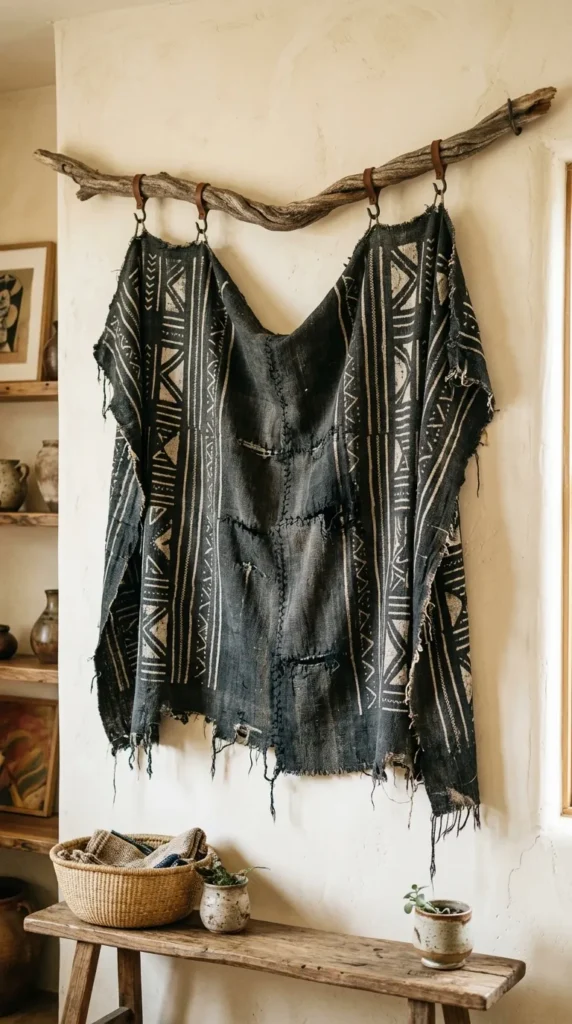
5. Antique Distressed Mudcloth Hanging
Textiles bring immediate warmth to a room. A genuine vintage piece of African mudcloth or a fragment of antique Japanese Boro cloth—characterized by its heavy patchworking and visible sashiko stitching—makes an incredible wall hanging. Suspend it gently from a simple branch or a raw iron rod. The faded dyes, frayed edges, and hand-stitched repairs epitomize the cozy, lived-in spirit of Wabi-Sabi.


6. Pressed Autumn Leaves in Shadow Boxes
Bring the gentle impermanence of the seasons indoors by pressing oversized fallen leaves, such as ginkgo, oak, or fern fronds. Choose leaves that aren’t perfectly green; look for those showing signs of turning—mottled browns, deep rusts, and curled edges. House them inside minimalist glass shadow boxes so the focus remains entirely on the intricate, decaying skeletal structure of the foliage.
7. Asymmetric Driftwood Sculptures
Walk along a beach or riverbank, and you will find sculptures carved entirely by water and time. Find a uniquely twisted, sun-bleached piece of driftwood and mount it directly to the wall using hidden brackets. Positioned over a low console table or a bed, its irregular twists and smoothed-out knots provide an earthy, organic focal point that grounds the entire room.
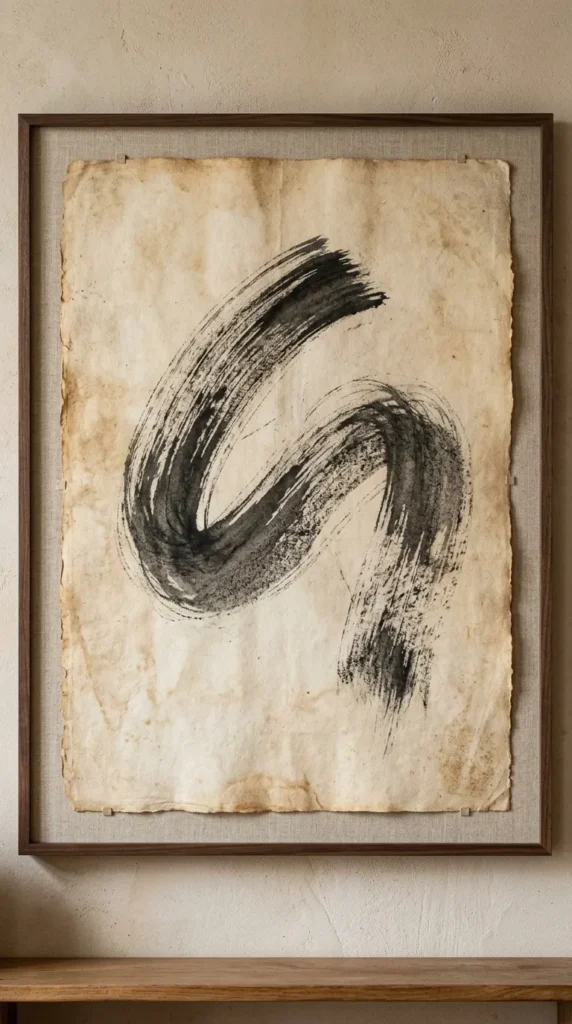
8. Faded Charcoal Calligraphy or Abstract Strokes
Wabi-Sabi art relies heavily on the concept of sumi-e (ink wash painting), where a few deliberate strokes capture the essence of a subject. Hang a large piece of aged, slightly yellowed parchment featuring a simple, abstract brush stroke done in diluted charcoal or black ink. The beauty lies in the variation of the ink density—where the brush ran dry, leaving a faint, textured streak on the paper.
9. Hand-Woven Raw Sisal and Jute Tapestry
Ditch the colorful, intricately patterned bohemian macramé for a minimalist, raw fiber wall hanging. Look for tapestries woven from un-dyed jute, coarse hemp, or sisal fibers. The irregularities in the thickness of the spin, the natural color variations from camel to straw, and a loose, unraveled bottom fringe bring a wonderful rustic texture to smooth drywall.
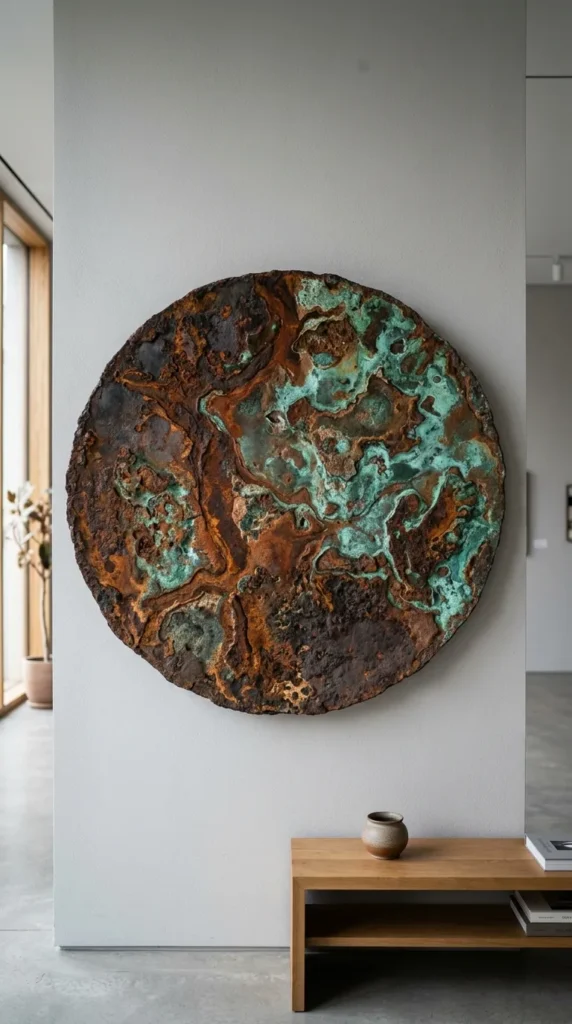
10. Corroded Metal and Iron Wall Discs
Time affects all materials, including metal. A large, circular wall disc made of oxidized iron, weathered bronze, or copper with a greenish verdigris patina introduces an industrial yet ancient element to your space. The unpredictable patterns created by rust and oxidation look like abstract aerial landscapes, embodying the Wabi-Sabi appreciation for natural decay.



11. Minimalist Clay Sconces with Living Moss
Incorporate living, changing art into your home with a pair of unglazed, matte terracotta or stoneware wall sconces. Instead of filling them with vibrant, perfect flowers, place clumps of preserved or living green forest moss inside them. The contrast between the dry, chalky clay and the soft, organic texture of the moss brings a quiet, forest-like serenity to your hallway or bedroom.
12. Distressed Lime-Washed Accent Section
Sometimes, the wall itself can be the decor. Instead of hanging items, use lime-wash paint to create a soft, textured, tonal accent area on a smooth wall. Apply the lime-wash in sweeping, multi-directional brushstrokes. As it dries, it develops a beautiful, chalky, mottled appearance reminiscent of old Mediterranean or ancient Japanese plaster walls that have weathered decades of humidity and sunshine.
13. Antique Unframed Oil Portraits
Look through thrift stores or estate sales for old, vintage oil paintings on canvas or board that have lost their frames. Art pieces that show faint cracking in the paint (craquelure), minor scuffs, or slightly faded colors possess an undeniable soul. Leaning one on a wall shelf or hanging it askew by a simple string honors the unknown history and the passage of time behind the artwork.
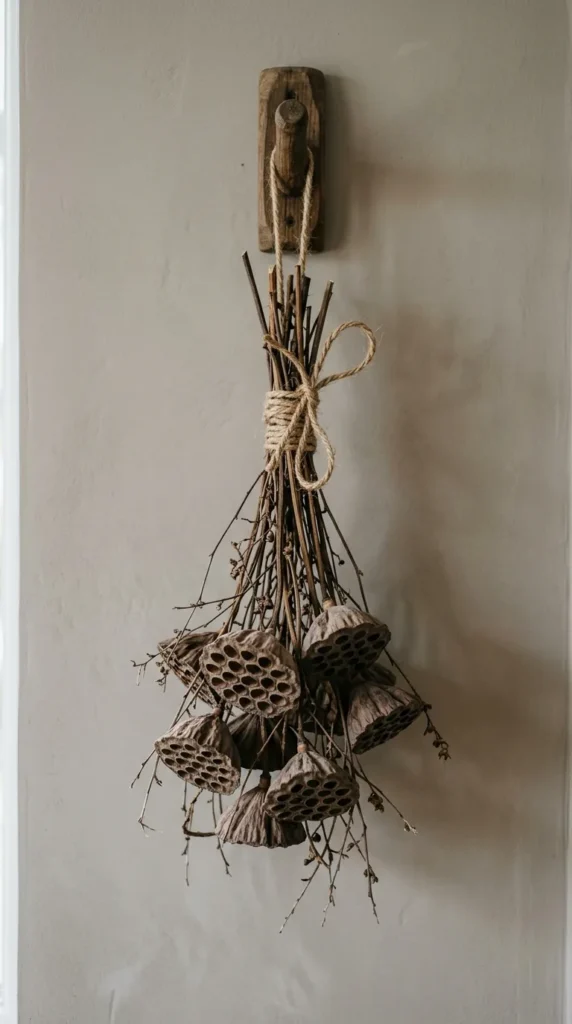
14. Dried Lotus Pod and Branch Bundles
Collect a bundle of long-stemmed, dried lotus seed pods, wild twigs, or branches of dried eucalyptus. Bind them loosely together at the base with a piece of rough twine and hang them upside down from a simple wooden peg on the wall. The sculptural, hollow shapes of the lotus pods and the brittle, muted tones of the dried wood create a delicate, poetic display of nature’s resting state.
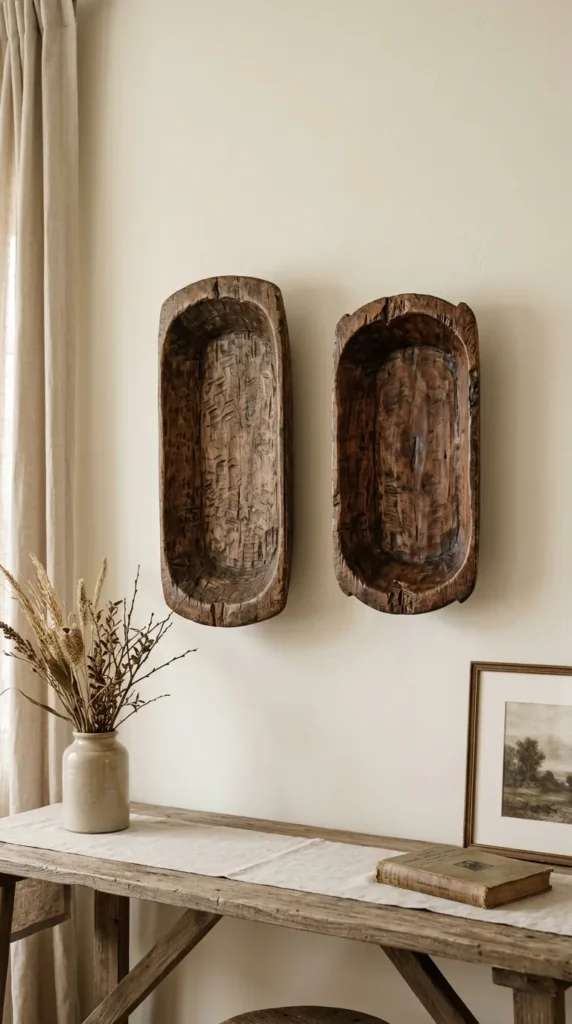
15. Hand-Carved Rustic Wood Shallow Bowls
Repurpose shallow, hand-carved dough bowls or antique wooden grain sifting trays by mounting them flat against the wall. The gouge marks from the artisan’s chisel, the deep oil patinas from decades of handling, and the natural cracks in the wood grain offer an authentic, tactile richness that instantly softens modern, sharp-lined furniture nearby.


16. Tinted Concrete Wall Panels
For a more contemporary take on Wabi-Sabi, install thin, lightweight architectural concrete panels with a raw, unpolished finish. The subtle color variations, tiny air bubbles, and slight imperfections inherent to poured concrete create a stone-like surface that feels incredibly grounded, solid, and soothingly brutalist when balanced with warm wooden accents.
17. Framed Vintage Linen Fragments
Textiles that have survived generations often possess a beautiful softness and character. Take a fragment of a vintage linen grain sack, an old homespun tablecloth, or a piece of antique lace showing gentle coloration or darning repairs. Mount it on a linen backboard within a simple frame to celebrate the enduring strength and humble beauty of utilitarian everyday fabrics.
18. Asymmetric Floating Raw-Edge Shelves
Instead of perfectly straight, uniformly cut floating shelves, choose thick slabs of wood that retain their natural live edge—the outer contour of the tree just beneath the bark. Install two or three of these shelves in an asymmetrical, staggered pattern. Populate them sparingly with one or two unglazed ceramic pots, leaving plenty of empty space to honor the natural line of the wood.
19. Bleached Woven Bamboo Mats
In traditional Japanese design, tatami and woven bamboo play a massive role. Mount a large, finely woven bamboo or seagrass mat directly to a wall as a backdrop for a bed or sofa. The subtle tonal shifts from pale cream to dried sage green, along with the tight, rhythmic, yet slightly imperfect weave pattern, bring an organic texture and a gentle, natural scent into the living space.
20. Cast Plaster Botanical Reliefs
Botanical casting is a beautiful way to freeze a moment in time. These are made by pressing live wildflowers, weeds, or seed heads into clay, and then pouring plaster over it to create a raised, 3D impression of the plant. Hang a grid or an asymmetrical group of these small, chalk-white square tiles. The fine details of the imperfect, bent stems and crinkled leaves are preserved forever in a clean, sculptural form.
Designing with Intention: Tips for Your Wabi-Sabi Wall
As you begin implementing these ideas, remember that Wabi-Sabi is less about following strict decorating rules and more about cultivating a specific feeling. Here are a few practical tips to ensure your wall updates remain true to this timeless philosophy:
Embrace Negative Space
One of the biggest mistakes in home decor is feeling the need to fill every square inch of empty wall space. In Wabi-Sabi, empty space (known as Ma) is considered just as important as the object itself. It gives the eye a place to rest and allows the chosen decor piece to truly shine. If you hang a large textured canvas, consider leaving the surrounding wall completely bare.
Stick to a Living Color Palette
Look out your window for color inspiration. The Wabi-Sabi palette is entirely derived from nature: the warm cream of river stones, the soft grey of morning mist, the deep brown of rich soil, the muted green of moss, and the subtle terracotta of baked earth. These tones naturally complement each other and create a deeply grounding, low-contrast environment.
Prioritize Tactility
A Wabi-Sabi home begs to be touched. When selecting wall decor, notice how the light hits the surfaces. Matte, chalky, rough, and fibrous surfaces absorb light and create soft, diffused shadows, which feel inherently more peaceful than high-gloss, reflective surfaces that bounce light harshly around the room.
Let Your Walls Evolve
Your home shouldn’t be finished in a single weekend. True Wabi-Sabi design is an evolving journey. Let your walls grow slowly as you discover items that truly speak to you—a piece of driftwood found on a memorable trip, an antique textile inherited from a grandparent, or a handmade plaster canvas you spent an afternoon crafting yourself.
By surrounding yourself with items that bear the beautiful marks of time, human hands, and natural processes, you create a home environment that doesn’t demand perfection from you—because it finds its ultimate beauty in being beautifully, wonderfully imperfect.